

Published by Dr. Nikolai Nikolaev
Manuka honey is safe for dogs and can help with wound healing, digestive support, and seasonal allergies. Bee pollen provides nutritional supplementation, and propolis offers immune support. All three have been used in veterinary practice, but correct dosage and quality matter. Here's what the evidence says and how to use bee products for your pets safely.
If you've been using Manuka honey or other bee products for your own health and wondered whether they could help your dog too, the answer for most products is yes, with some important guidelines.
This article is educational and is not a substitute for medical advice. Always follow product labels and speak with a qualified health professional for personal health concerns.
Manuka Honey for Dogs
Wound Healing
This is the most well-established use. Manuka honey's antibacterial (MGO) and wound-healing properties work the same way on animal skin as they do on human skin. Veterinarians have used medical-grade Manuka honey for:
Minor cuts, scrapes, and abrasions
Hot spots (acute moist dermatitis)
Post-surgical wound care
Minor burns
How to apply: Clean the wound gently, apply a thin layer of UMF 15+ Manuka honey directly to the affected area, and cover with a light bandage to helps stop your dog from licking it off. Reapply daily. For serious wounds, always consult your vet first.
Digestive Support
Manuka honey's prebiotic properties and antibacterial activity can support canine gut health. Some pet owners report improvement in dogs with mild digestive issues, and the soothing properties of honey can help with mild stomach upset.
Dosage:
Dog Size Daily Amount Small (under 10kg)1/4 teaspoon Medium (10-25kg)1/2 teaspoonLarge (25kg+)1 teaspoon
Seasonal Allergies
Some pet owners use local honey (including Manuka) to help manage seasonal allergies in dogs. The theory is that trace amounts of local pollen in honey can help build tolerance. While scientific evidence for this specific use is limited, anecdotal reports from pet owners and some holistic vets are positive.
Kennel Cough and Throat Soothing
The soothing, antibacterial properties of Manuka honey can help dogs with mild coughs or throat irritation. A small amount given directly or mixed into food can provide comfort. For persistent coughs or suspected kennel cough, always see your vet.
Bee Pollen for Dogs
Bee pollen is a nutrient-dense supplement that can benefit dogs in several ways:
Nutritional supplementation: bee pollen contains proteins, vitamins, minerals, and amino acids that support overall health
Allergy support: gradual introduction of bee pollen may help desensitise dogs to environmental allergens
Coat and skin health: the nutritional profile supports healthy skin and a glossy coat
Energy and vitality: older dogs or those recovering from illness may benefit from the nutritional boost
Dosage: Start with just a few granules mixed into food and gradually increase over 1-2 weeks. Small dogs: 1/4 teaspoon daily. Medium dogs: 1/2 teaspoon. Large dogs: 1 teaspoon. Watch for any allergic reaction when starting.
Propolis for Dogs
Propolis can support canine immune function and has been used by holistic vets for:
Immune support: particularly during seasonal changes or when dogs are exposed to other animals (boarding, dog parks)
Oral health: propolis's antibacterial properties may support gum and dental health
Minor skin issues: topical propolis can help with minor skin irritations and hot spots
Dosage: Use propolis products specifically formulated for pets, or consult your vet for dosage of human-grade propolis tincture. Generally, dogs receive about 1/4 to 1/2 the human dose depending on body weight.
What NOT to Give Pets
Bee venom products: do not use bee venom creams or supplements on pets without veterinary guidance. Dogs can have allergic reactions to bee venom just like humans
Royal jelly: limited research on safety for dogs. Consult your vet before using
Excessive amounts: honey is high in natural sugars. Stick to recommended dosages, especially for dogs with diabetes or weight issues
Honey for puppies under 1 year: as with human infants, very young puppies should avoid honey due to potential botulism risk. Consult your vet
Choosing Quality Products for Pets
The same quality standards apply for pet use as for human use:
Use UMF-certified Manuka honey: especially for wound care, where antibacterial potency matters
Choose raw, unpasteurised products: heat processing reduces bioactive compounds
Check for purity: avoid products with added sugars, flavours, or artificial ingredients
Buy from traceable sources: batch numbers and lab certificates matter just as much for pet products
ApiHealth's pet products range is specifically formulated for animal use, with appropriate concentrations and pet-safe formulations.
Frequently Asked Questions
Can I give my dog the same Manuka honey I eat?
Yes, human-grade Manuka honey is safe for dogs (over 1 year old). Just use the appropriate dosage based on your dog's size. UMF 10+ or 15+ is a good choice for general health and wound care.
Is Manuka honey safe for cats?
Topical use of Manuka honey for wound care is generally safe for cats under veterinary guidance. However, cats should not be given honey orally as a supplement, their digestive system handles sugars differently. Always consult your vet for feline use.
Can bee pollen cause allergic reactions in dogs?
Rarely, but it's possible. Start with just 2-3 granules and gradually increase over two weeks. If you notice itching, swelling, or digestive upset, discontinue use. Dogs with known pollen or bee product allergies should avoid bee pollen entirely.
How do I apply Manuka honey to my dog's wound?
Clean the wound with warm water, pat dry, apply a thin layer of UMF 15+ honey, and cover with a non-stick bandage or pad. Use an e-collar (cone) if needed to prevent licking. Change the dressing and reapply honey daily. For deep or infected wounds, see your vet first.
Can diabetic dogs have Manuka honey?
Use caution. Honey is high in natural sugars and can affect blood glucose levels. Small amounts for wound care (topical) are fine, but oral supplementation in diabetic dogs should only be done under veterinary supervision.
If your dog needs joint support rather than wound care, read our guide to green-lipped mussel for dogs, covering benefits, safety, and how to choose a joint supplement in New Zealand.
The Bottom Line
Manuka honey, bee pollen, and propolis are all safe and potentially beneficial for dogs when used correctly. The most evidence-backed uses are wound healing (Manuka honey) and nutritional supplementation (bee pollen). Always start with small amounts, use quality products, and consult your vet for specific health conditions.
Explore our pet products range: bee-based health products formulated specifically for animals.

About the author
Dr. Nikolai Nikolaev
Founder & Lead Researcher, ApiHealth NZ
Dr. Nikolai Nikolaev founded ApiHealth in New Zealand and has spent more than 25 years researching bee-derived health products. He pioneered the company’s patented VENZ bee venom collection technology and leads its work on apitherapy, Manuka honey and propolis.
More about the ApiHealth teamKey Ingredients
Featured Products
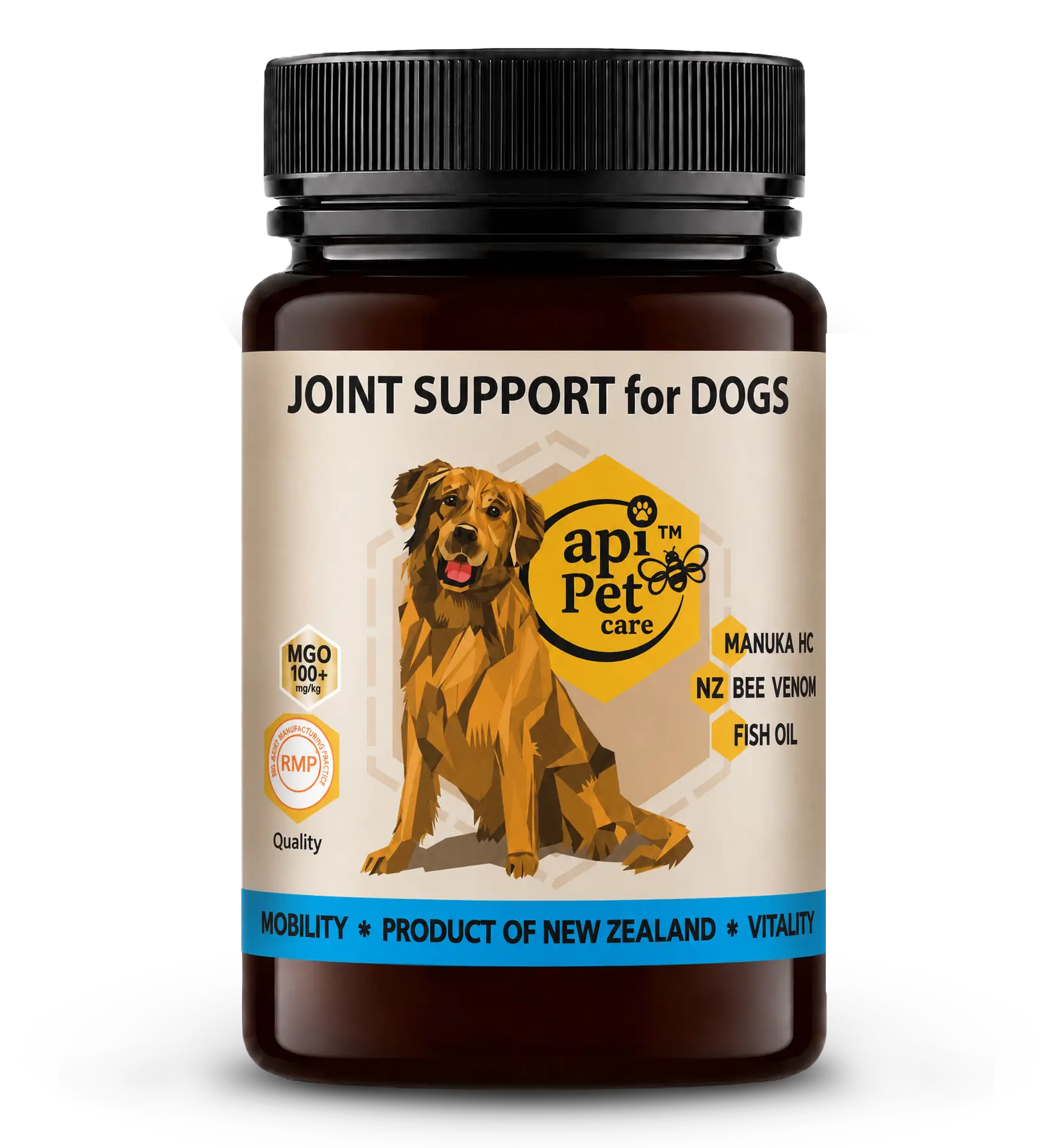
Joint Support Manuka Honey For Dogs
A Manuka honey formula for dogs with VENZ™ bee venom and fish oil, crafted to support joint comfort, mobility and an active daily life.
$25.00
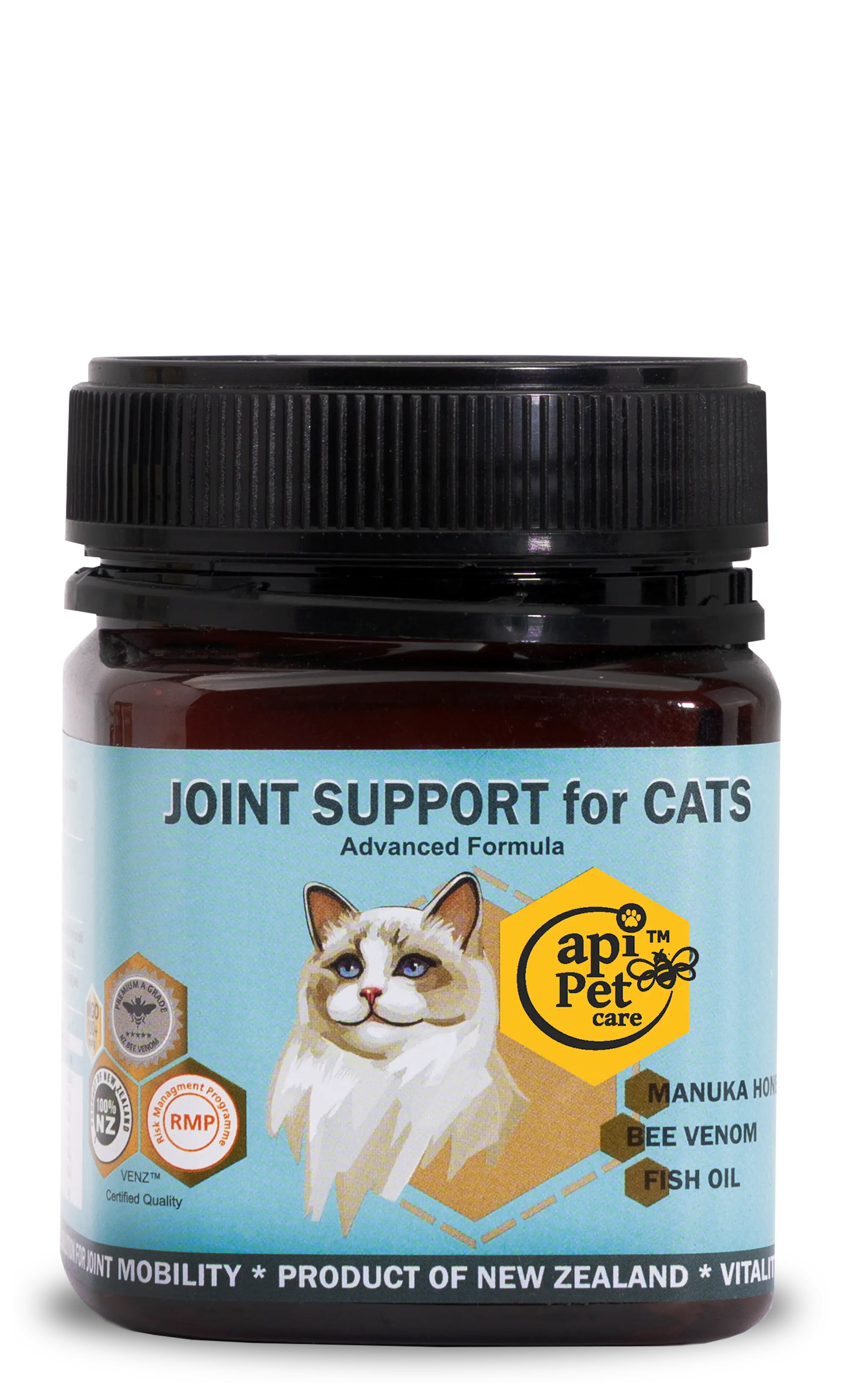
Joint Support Manuka Honey For Cats
New Zealand Manuka honey blend crafted to support joint mobility in cats.
$25.00
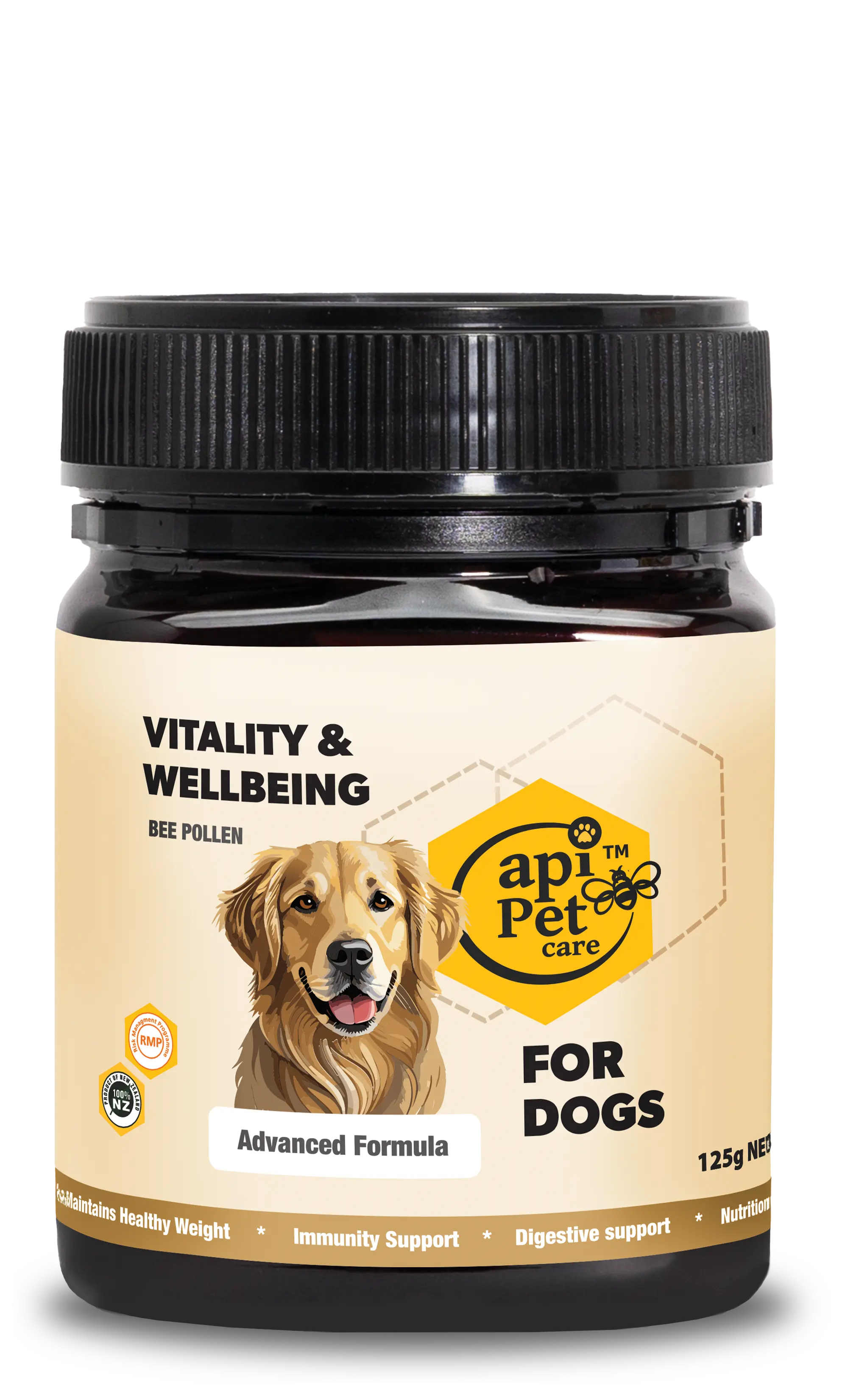
New Zealand Bee Pollen For Dogs
New Zealand Manuka honey blend crafted to support general health.
$20.00
Related Articles
View all
Green-Lipped Mussel for Dogs: Benefits, Safety & How to Choose a Joint Supplement in NZ
What does green-lipped mussel do for dogs? Explore the research, safety considerations and how to compare dog joint supplements in New Zealand.
Better Together: ApiHealth Product Combinations That Support Your Goals
Some bee products complement each other naturally. Discover five practical ApiHealth combinations for joints, immunity, energy, digestion and skin, and how to build a routine that works.
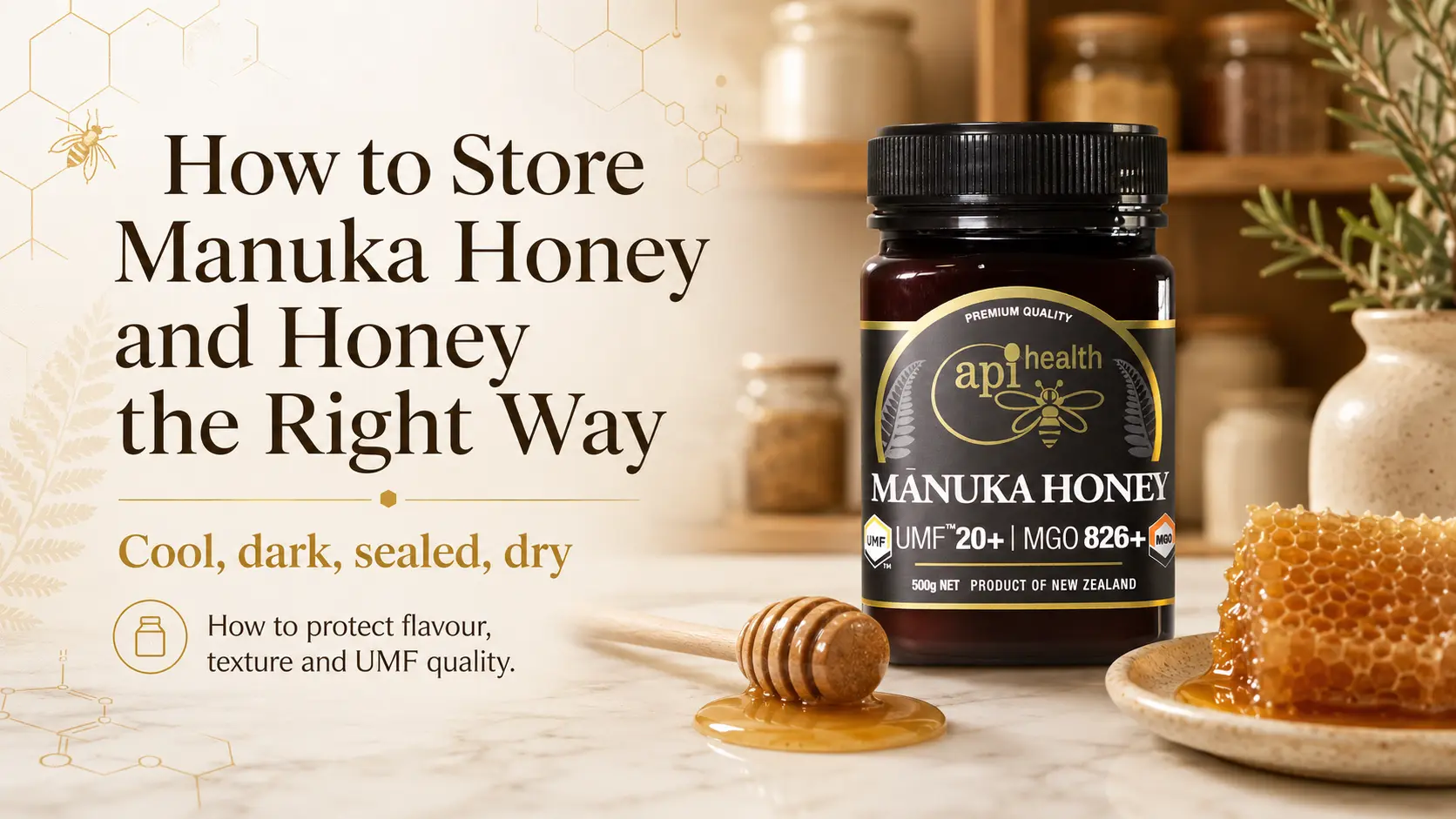
How to Store Manuka Honey and Honey the Right Way
Store Manuka honey and everyday honey in a cool, dark cupboard with the lid sealed. Learn what to avoid, how to fix crystals, and how to protect UMF quality.
Shop ApiHealth
Ready to bring the hive home?
Explore our New Zealand-made Manuka honey, VENZ bee venom, propolis and natural wellness range, crafted by our family of beekeepers and researchers.
