

Published by Dr. Nikolai Nikolaev
Quick answer: Bee venom cream is a topical formula that carries bee venom peptides, mainly melittin and apamin, into the skin over a sore joint or muscle. Laboratory and animal research shows these peptides interact with the body's inflammatory signalling, and human trials of bee venom injections and acupuncture report meaningful improvements in knee osteoarthritis comfort and movement. Direct evidence for creams is still limited, so a good bee venom cream is best understood as a natural way to support everyday joint comfort, not a substitute for medical care.
"Does bee venom cream really work for arthritis?" is one of the first questions New Zealanders ask when they discover apitherapy, and it is a fair one. People have used bee venom in traditional medicine for thousands of years, and modern science is now catching up on why. This guide walks through what bee venom cream is, how it works on stiff and aching joints, what the research genuinely shows, how to use it safely, and where to find a traceable New Zealand option.
What is bee venom cream?
Bee venom, known scientifically as apitoxin, is the natural defence fluid a honey bee uses to protect its colony. It is not a single substance but a complex mix of peptides and enzymes. The best studied is melittin, which makes up around half of dried bee venom by weight, followed by apamin, phospholipase A2 (PLA2), adolapin and peptide 401. Each plays a different role, which is why researchers study venom as a whole matrix rather than one molecule.
A bee venom cream simply carries a small, measured amount of this venom in a smooth base you massage into the skin. Unlike a live bee sting or a clinic injection, a cream lets you apply a controlled, gentle dose at home, directly over the area that feels stiff or sore. If you want the wider picture of how venom is used across creams, tablets and honey formulas, see our guide to bee venom therapy benefits, uses and safety, and the science behind ethical VENZ™ bee venom.
How bee venom cream works on sore joints and muscles
There are two layers to how a bee venom cream feels and works. The first is immediate and physical. As you massage the cream in, most people feel a mild warming or tingling at the surface as blood flow to the area increases. This gentle, counter-irritant warmth is part of why a topical formula feels soothing on a stiff knee or a tired muscle.
The second layer is biological. In laboratory and animal studies, melittin and apamin have been shown to influence the signalling pathways the body uses to manage inflammation, including the NF-κB pathway and enzymes such as COX-2 and PLA2. In these models, bee venom components reduced markers of inflammation such as TNF-α, IL-1β and IL-6. In plain language, researchers are studying how bee venom peptides may help support a normal, balanced inflammatory response in the tissue around a joint. This is mechanism research, so it explains the "why" behind traditional use, not proof of a medical outcome.
Does bee venom cream really work? What the science says
This is where honesty matters. The strongest human evidence for bee venom and joints comes from injections and bee venom acupuncture, not creams. A 2019 phase 3 randomised controlled trial found that purified honey bee venom dermal injections produced a significant improvement in knee osteoarthritis pain and physical function compared with a control, and the benefit was still measurable four weeks after the course finished. Several smaller trials of bee venom acupuncture in knee osteoarthritis and low back pain have reported similar positive signals.
Evidence for bee venom creams specifically is much thinner, and independent reviewers note that the benefits of topical bee venom are not yet well defined in large clinical trials. A cream delivers a smaller, gentler dose through intact skin, so it is reasonable to view it as a supportive, everyday comfort option rather than a treatment proven to match injections. Many people use a quality bee venom cream as part of a wider routine and find the warming massage genuinely soothing. Individual experiences vary, and a cream is a wellness product, not a medicine.
Best uses: knees, hands, muscles and everyday stiffness
Because it is applied to a specific spot, bee venom cream suits localised, everyday discomfort. People most often reach for it to support:
- Knees: stiff or achy knees after activity, gardening or long days on your feet.
- Hands and wrists: the small joints that feel tight in the morning or after repetitive work.
- Shoulders and neck: tension that builds from desk work or poor sleep posture.
- Lower back: a common spot for everyday stiffness and tightness.
- Muscles: tired or overworked muscles after exercise, as part of a warm-down massage.
For ongoing joint support from the inside, some people pair a topical cream with an oral formula such as Manuka GlucoVENZ™, which combines VENZ™ bee venom with glucosamine in a daily spoonful for joint mobility support.
How to use bee venom cream safely
Bee venom is powerful, so a little care goes a long way. Follow these steps:
- Patch test first. Apply a small amount to your inner forearm and wait 24 hours before wider use, especially the first time.
- Apply a thin layer to clean, dry skin over the area that feels stiff or sore, once or twice a day.
- Massage it in gently until it absorbs, then wash your hands.
- Expect mild warmth or tingling. This usually fades within 15 to 30 minutes and is the venom stimulating blood flow, not an allergic reaction.
- Keep it away from eyes, broken skin and cuts, and never apply it to damaged skin.
Some people should avoid bee venom products altogether. Do not use a bee venom cream if you are allergic to bee stings, as reactions can be serious. Speak to your doctor first if you are pregnant or breastfeeding, take blood-thinning medication, or are considering it for a child. If you notice intense burning, a spreading rash, swelling or any other sign of an allergic reaction, wash it off and stop using it. For fuller guidance, read our bee venom safety guide.
Where to buy bee venom cream in New Zealand
If you are searching for bee venom cream in NZ, the thing that matters most is traceability. Bee venom potency varies enormously between anonymous, commodity sources, and so does the allergen profile. ApiVENZ™ Relief Cream is made in New Zealand using VENZ™ bee venom that is ethically collected without harming the bees and batch tested for consistency, so you know what is in every tube. You can learn more about the collection technology and lab work on our Science and Research page.
Frequently asked questions
Does bee venom cream really work for arthritis?
Human trials show that bee venom injections and acupuncture can improve knee osteoarthritis comfort and movement, and laboratory research explains how its peptides interact with inflammatory pathways. Direct trial evidence for creams is more limited, so bee venom cream is best used to support everyday joint comfort rather than as a substitute for medical treatment. Results vary from person to person.
How does bee venom cream work?
It works in two ways. The massage and gentle warming sensation increase local blood flow, which feels soothing, while venom peptides such as melittin and apamin are studied for their role in supporting a normal inflammatory response in the surrounding tissue.
Is bee venom cream safe?
For most people without a bee allergy, bee venom cream is well tolerated when used as directed. Always patch test first. Avoid it entirely if you are allergic to bee stings, and check with your doctor if you are pregnant, breastfeeding, on blood thinners, or using it for a child.
What does bee venom cream feel like?
Most people feel a mild warming or tingling as it absorbs and blood flow to the area rises. This is normal and usually settles within 15 to 30 minutes. It should not cause intense burning or swelling. If it does, wash it off and stop using it.
Can you use bee venom cream for knee pain?
Knees are one of the most common areas people apply bee venom cream, particularly for everyday stiffness after activity. Massage a thin layer over the joint once or twice daily, and pair it with gentle movement for the best everyday comfort.
How often should you apply bee venom cream?
Once or twice a day is typical, usually morning and evening, or before and after activity. Always follow the directions on your specific product, and start with less while you see how your skin responds.
Where can I buy bee venom cream in NZ?
ApiVENZ™ Relief Cream is a New Zealand made option that uses traceable, ethically collected VENZ™ bee venom. Browse it and the wider VENZ™ range to compare creams, tablets and honey formulas.
The bottom line
Bee venom cream is a genuinely interesting natural option for everyday joint and muscle comfort. The mechanism research is encouraging, the strongest human evidence so far is for injections and acupuncture, and a good cream offers a gentle, convenient way to bring bee venom into a daily routine. Choose a traceable, batch-tested New Zealand product, patch test before you start, and see it as one supportive part of looking after your joints, alongside movement, rest and good nutrition.

About the author
Dr. Nikolai Nikolaev
Founder & Lead Researcher, ApiHealth NZ
Dr. Nikolai Nikolaev founded ApiHealth in New Zealand and has spent more than 25 years researching bee-derived health products. He pioneered the company’s patented VENZ bee venom collection technology and leads its work on apitherapy, Manuka honey and propolis.
More about the ApiHealth teamFeatured Products
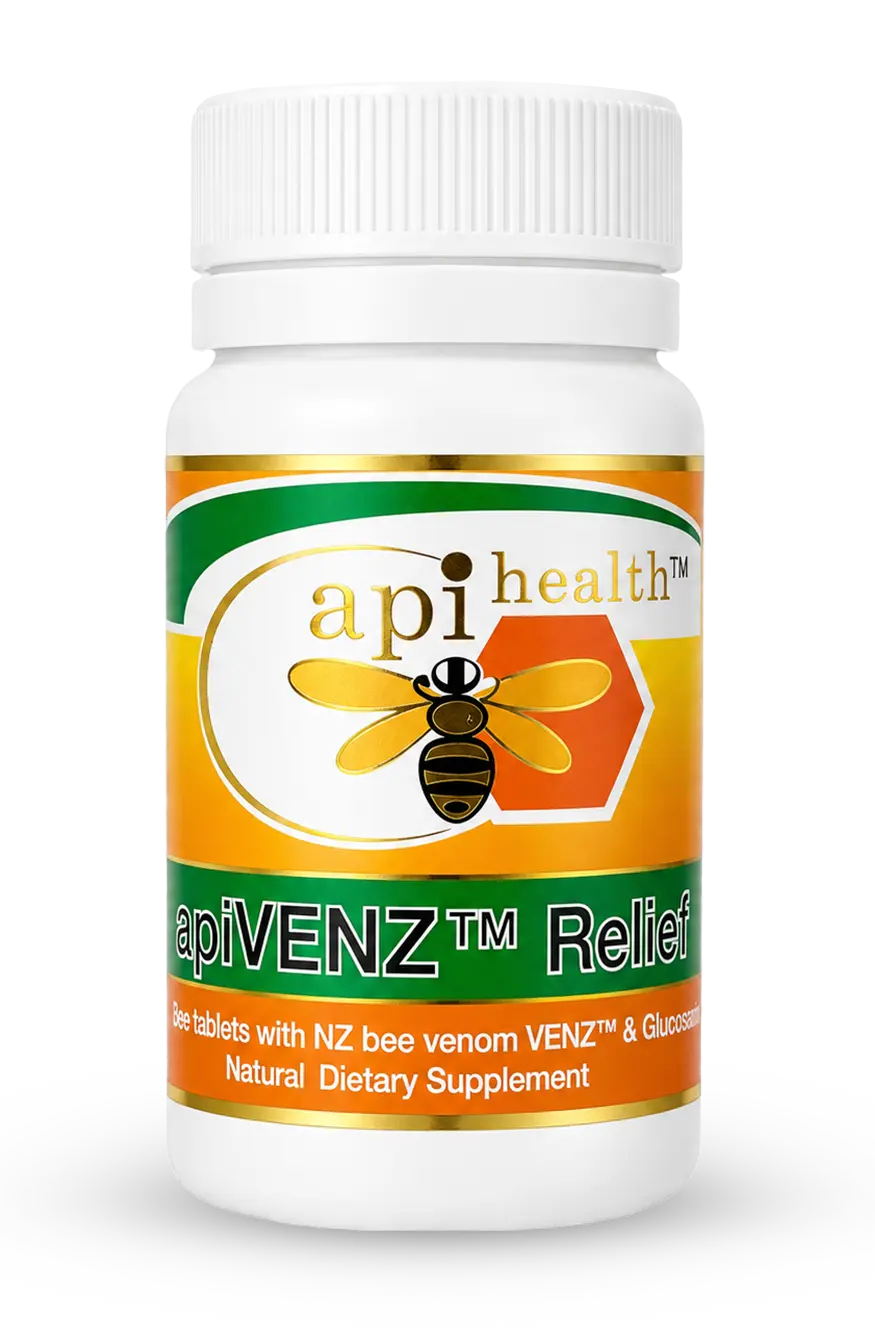
Apivenz™ Relief Chewable Tablets
Convenient daily supplement crafted from New Zealand ingredients to support overall wellbeing.
$32.00
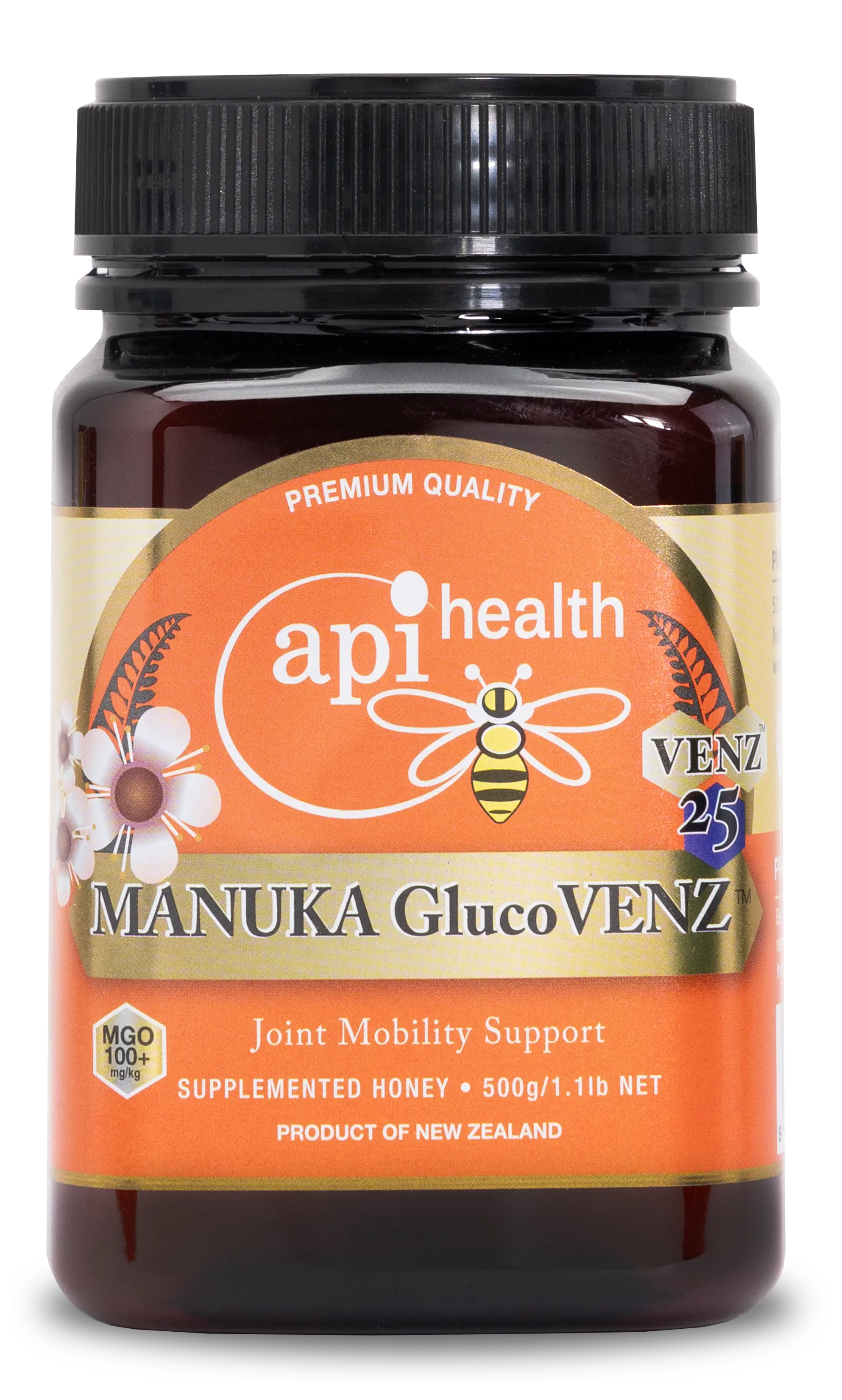
Manuka Glucovenz™
A Manuka honey formula with VENZ™ bee venom and glucosamine, crafted to support joint mobility, flexibility and everyday movement.
$26.00
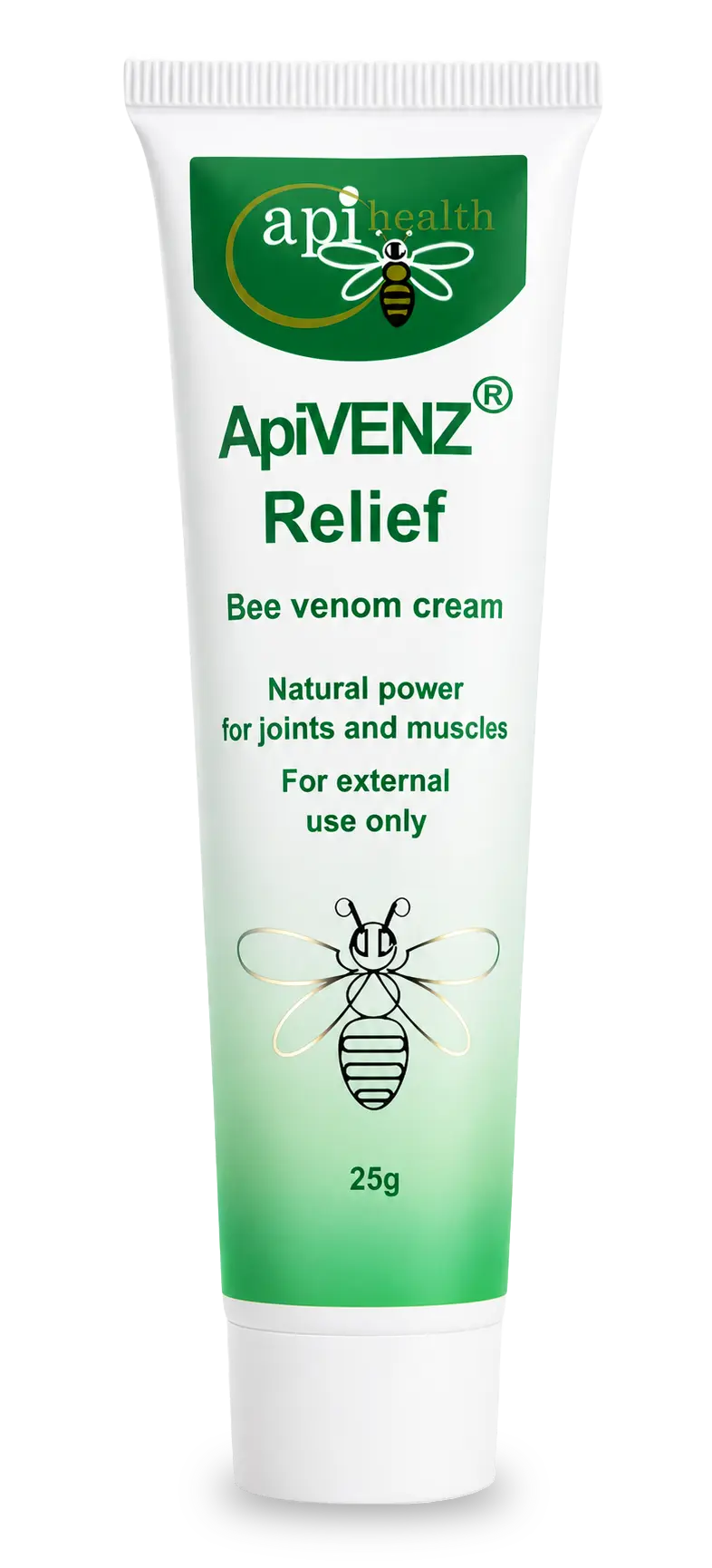
Apivenz™ Relief Cream
Topical bee venom cream made in New Zealand with VENZ™, formulated for the joints and muscles. Supports joint mobility and normal blood circulation.
$40.00
Related Articles
View all
Bee Products for Longevity: How Manuka Honey, VENZ™, Propolis and Royal Jelly Support Healthy Ageing
Manuka honey, bee venom, propolis and royal jelly are often grouped together as bee products for longevity. Here is what the science says about each one.

Beyond Ingredients: The Bioactive Compounds in Bee Products
A clear look at the bioactive compounds in bee products: 10-HDA in royal jelly, flavonoids in propolis, and melittin in bee venom, and why preservation matters.
Better Together: ApiHealth Product Combinations That Support Your Goals
Some bee products complement each other naturally. Discover five practical ApiHealth combinations for joints, immunity, energy, digestion and skin, and how to build a routine that works.
Shop ApiHealth
Ready to bring the hive home?
Explore our New Zealand-made Manuka honey, VENZ bee venom, propolis and natural wellness range, crafted by our family of beekeepers and researchers.