
Published by Dr. Tatiana Nikolaeva
Apitherapy used to mean one thing in the public imagination: a bee, a sting, and folklore handed down through generations. That image still shapes how people search for "bee venom benefits", yet the most interesting shift in the field is not louder marketing around stings. It is standardisation: venom collected without harming bees, refined to known peptide profiles, and delivered in formulas people can use calmly as part of daily life.
For a science-led New Zealand bee company like ApiHealth, that shift is the whole point. The future of apitherapy is not the ritual of the sting. It is the science behind the bee: traceable VENZ™ venom, UMF™-anchored Mānuka matrices, and decades of collection and lab work from East Tamaki.
This article is educational and is not a substitute for medical advice. Always follow product labels and speak with a qualified health professional for personal health concerns.
Why Mobility-Minded Wellness Readers Are Looking at Bee Venom Now
Movement matters at every age, but the conversation has changed. People want routines that support joint comfort, flexibility, and the confidence to stay active, not dramatic promises or clinic-only protocols. Bee venom has re-entered that conversation because its key peptides, especially melittin and phospholipase A2 (PLA2), have been studied for decades in laboratory and clinical literature for their roles in inflammatory pathways and tissue comfort.
A 2025 systematic review of randomised trials on bee venom acupuncture for musculoskeletal pain found some positive signals compared with sham injections, but authors stressed important limits: small sample sizes, varied doses, and considerable clinical heterogeneity, meaning results cannot be generalised as a medical guarantee. That nuance matters. It is exactly why batch consistency and ethical sourcing separate serious New Zealand formulations from anonymous commodity venom.
Recent reviews in Frontiers in Immunology and Frontiers in Pharmacology (2024) similarly highlight melittin's biological complexity: potential interest for joint comfort research alongside real challenges around dose, delivery format, and allergenicity. Modern apitherapy, done responsibly, addresses those challenges through formulation rather than folklore.
What Bee Venom Actually Is (In Plain Language)
Bee venom (apitoxin) is a complex natural material. Melittin makes up a large share of dry venom and is associated with many of the biological activities researchers discuss. PLA2 is an enzyme often studied alongside melittin; it is also one of the components linked to sensitisation in people who react strongly to bee stings. Other peptides and enzymes (such as apamin) appear in smaller proportions and are part of why venom is studied as a whole matrix, not a single molecule.
Traditional apitherapy sometimes used live stings. Modern ethical apitherapy, as ApiHealth practices it, aims for the opposite experience: no harm to the hive, defined potency, and practical formats such as cream, tablet, or Mānuka honey formulas that fit a wellness shelf, not a procedure room.
Why VENZ™ Is Different from "Any Bee Venom"
VENZ™ is ApiHealth's registered New Zealand bee venom platform. The company's venom programme dates to the late 1990s, including patented non-harmful collection (NZ Patent No. 329585): bees contact a glass plate via gentle electrical stimulation, deposit venom, and return to the colony. Each batch is tied to Certificates of Quality and Origin, covering apiary, collection date, and lab parameters such as melittin and PLA2 activity.
Most commodity venom lacks that chain of custody. Potency swings batch to batch; allergenic profiles are unpredictable. VENZ™ is built around control: own apiaries, in-house refinement, and assays that help keep formulas consistent, whether in ApiVENZ™ Relief Cream for targeted topical use, ApiVENZ™ Chewable Tablets, or Mānuka honey formulas such as Manuka GlucoVENZ™ (with glucosamine for joint mobility support in a daily spoonful routine).
ApiHealth research into venom in a Mānuka honey matrix has explored reduced PLA2 allergenicity compared with venom alone, a practical example of science-led formulation rather than raw toxin thinking. You can read more on the Science & Research page.
How ApiHealth Interprets the Science (Without Overclaiming)
ApiHealth does not present bee venom as a replacement for medical care. The brand's position is ethical apitherapy for daily wellness: supporting mobility, immune resilience, and skin vitality through bee-derived actives combined with UMF™ Mānuka honey, propolis, royal jelly, and pollen where appropriate.
Where literature discusses melittin and inflammatory pathways, ApiHealth's language stays in the wellness lane: supports joint comfort, designed for active ageing, antioxidant-rich hive nutrition, not supports, supports, supports recovery, or supports general wellness. That discipline protects readers and reflects how a UMFHA-licensed, MPI RMP-certified NZ manufacturer should communicate.
If you are comparing options, look for: defined venom ppm in honey, published collection ethics, lab certificates, and clear allergy warnings for anyone with bee-sting sensitivity. Our Trust Center outlines the certifications behind that promise.
Where It Fits in a Calm Daily Routine
Think in layers. Mobility wellness is holistic, and bee venom formulas are companions to walking, stretching, and sensible recovery, not magic shortcuts.
- Topical: ApiVENZ™ Relief Cream for targeted areas as part of morning or post-activity self-care.
- Oral daily: Chewable tablets or a measured teaspoon of a VENZ™ Mānuka formula, often started low and increased gradually per label directions.
- Broader hive nutrition: UMF™ Mānuka, propolis, or pollen for seasonal resilience, alongside movement, sleep, and recovery basics.
Formats like Manuka ProVENZ™ pair VENZ™ with propolis for customers who want immune-season support alongside their mobility routine. Explore the full VENZ™ range to find a format that matches how you actually live.
What to Look for in a Quality Bee Venom Product
- Named venom trademark (e.g. VENZ™): Traceability and brand accountability.
- NZ origin + export-grade certifications: MPI RMP, UMFHA membership.
- Batch testing (melittin / PLA2): Consistency vs anonymous powder.
- Ethical collection patent or documented method: Hive welfare and repeatable harvest.
- Clear allergen guidance: Bee venom is not suitable for everyone.
- Honey-matrix or delivery format: Supports gentler daily use vs raw sting exposure.
How ApiHealth Differs
ApiHealth is a progressive NZ bee-science company, not a generic honey reseller. Founders with biological research backgrounds built venom collection technology before "apitherapy" became a social-media trend. Today the range spans VENZ™ mobility, UMF™ trust anchors, ApiPet vitality, and ApiBeaute skin longevity: one ethical-apitherapy platform with multiple doors in.
Read Our Story for the timeline from 1997 R&D through the 2000 patent to 2020 PLA2-honey matrix work. That is modern apitherapy: intelligent, warm, and grounded in the hive, without asking bees or humans to pay an unnecessary price.
Frequently Asked Questions
What is ethical apitherapy?
It is the use of bee-derived materials (venom, honey, propolis, pollen, royal jelly) in ways that prioritise hive welfare, batch testing, and clear consumer guidance, rather than uncontrolled live stings.
Is VENZ™ the same as getting stung by a bee?
No. VENZ™ is refined, standardised New Zealand bee venom used in measured formulas. Anyone with bee-sting allergy or sensitivity should consult a health professional before use.
Can bee venom products support mobility?
Many customers use VENZ™ formulas as part of an active-ageing routine focused on joint comfort and daily movement. Experiences vary; products are wellness supplements, not medicines.
Why pair bee venom with Mānuka honey?
UMF™-graded Mānuka provides a trusted NZ matrix. ApiHealth has researched venom in honey for quality and allergenicity considerations compared with venom alone.
Who should avoid bee venom wellness products?
People with known bee or venom allergy, pregnancy or breastfeeding (unless advised otherwise), or those on prescribed medicines should seek professional advice first.
How do I start safely?
Follow label directions, often starting with a small initial serving for oral products, and stop if you notice irritation or sensitivity. Patch-test topical products.
The Bottom Line
The future of apitherapy is not the sting. It is the science behind the bee. Ethical collection, standardised VENZ™, and thoughtfully designed formulas let you explore bee venom wellness on your own terms. If mobility and daily resilience are part of your story, start with the VENZ™ collection, read the research, and choose a format that fits your routine.
About the author
Dr. Tatiana Nikolaeva
Co-founder & Product Researcher, ApiHealth NZ
Dr. Tatiana Nikolaeva works alongside the ApiHealth research team in New Zealand, focusing on natural formulations across the company’s bee-derived wellness and skincare ranges. She writes on Manuka honey, bee pollen and everyday natural wellness.
More about the ApiHealth teamKey Ingredients
Featured Products
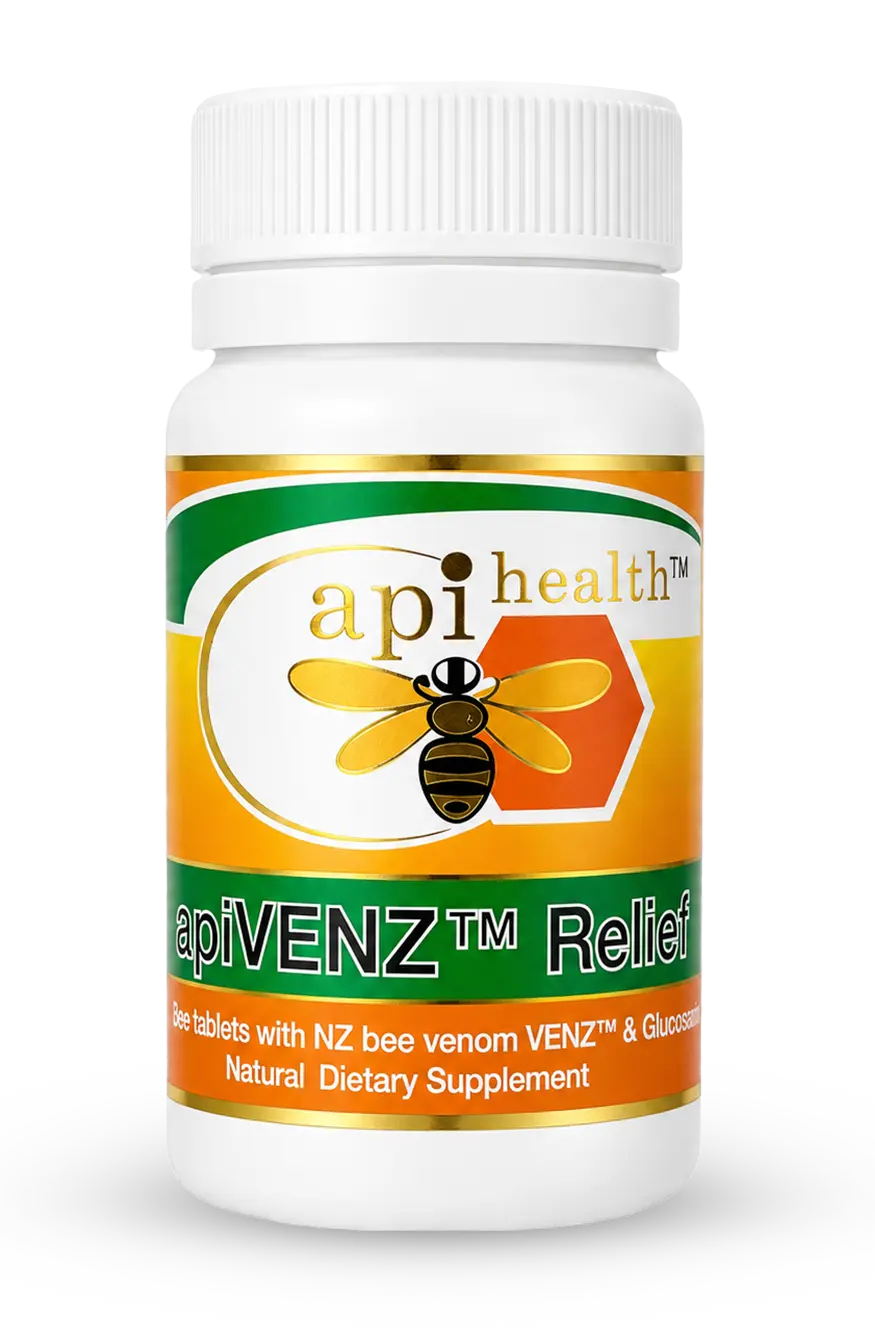
Apivenz™ Relief Chewable Tablets
Convenient daily supplement crafted from New Zealand ingredients to support overall wellbeing.
$32.00
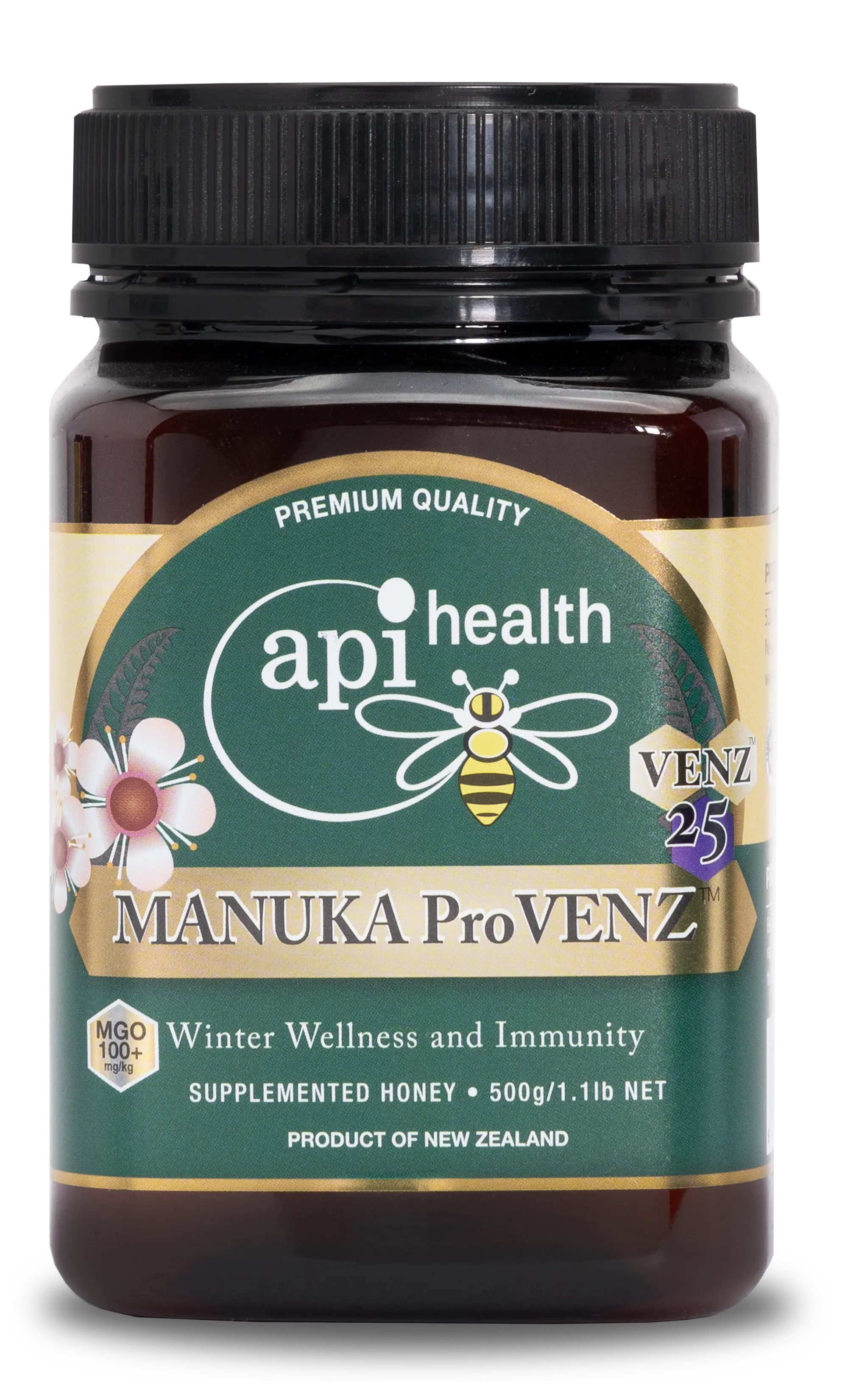
Manuka Provenz™
A Manuka honey formula with propolis and VENZ™ bee venom, crafted to support immune wellbeing, seasonal resilience and everyday vitality.
$25.00
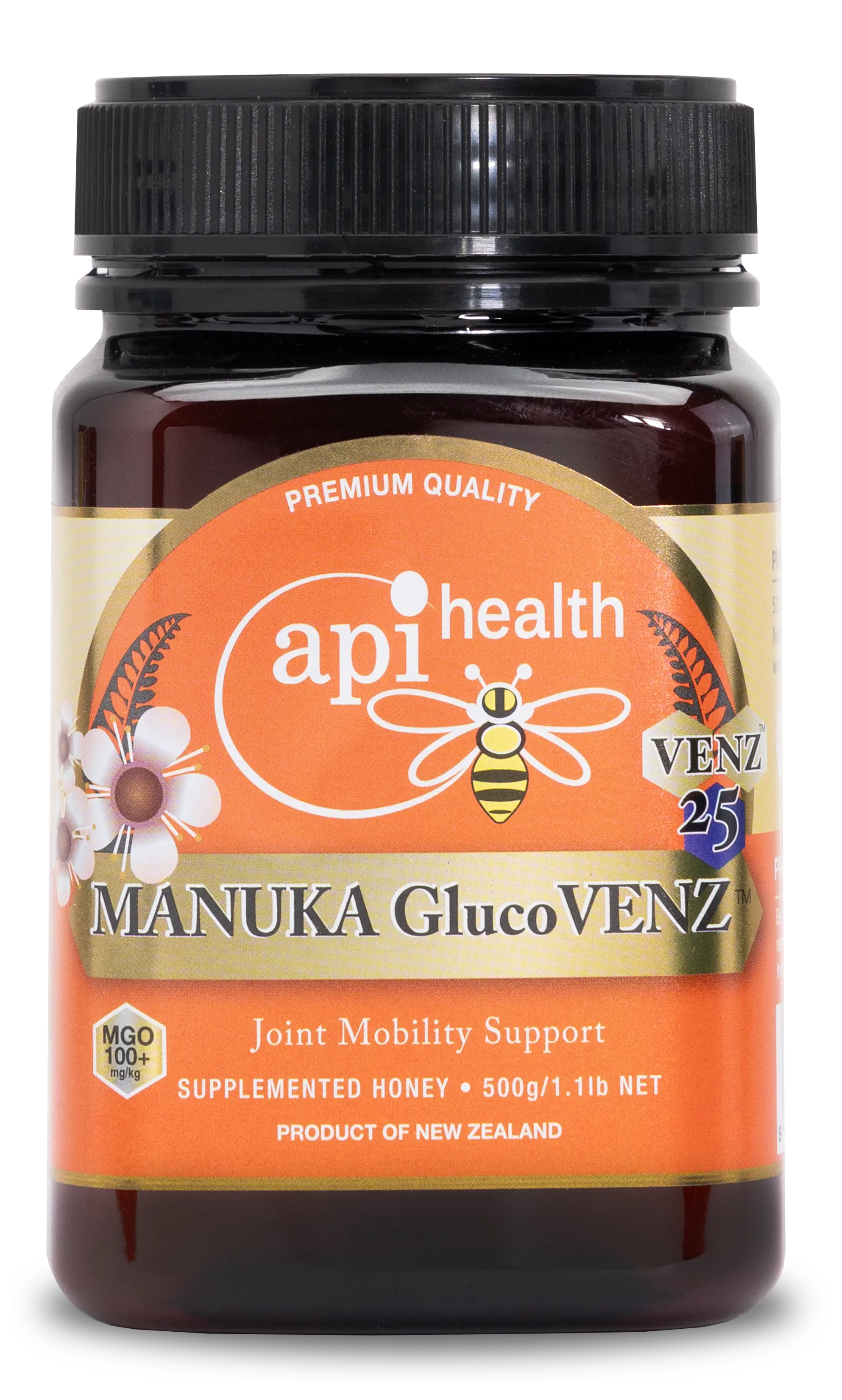
Manuka Glucovenz™
A Manuka honey formula with VENZ™ bee venom and glucosamine, crafted to support joint mobility, flexibility and everyday movement.
$26.00
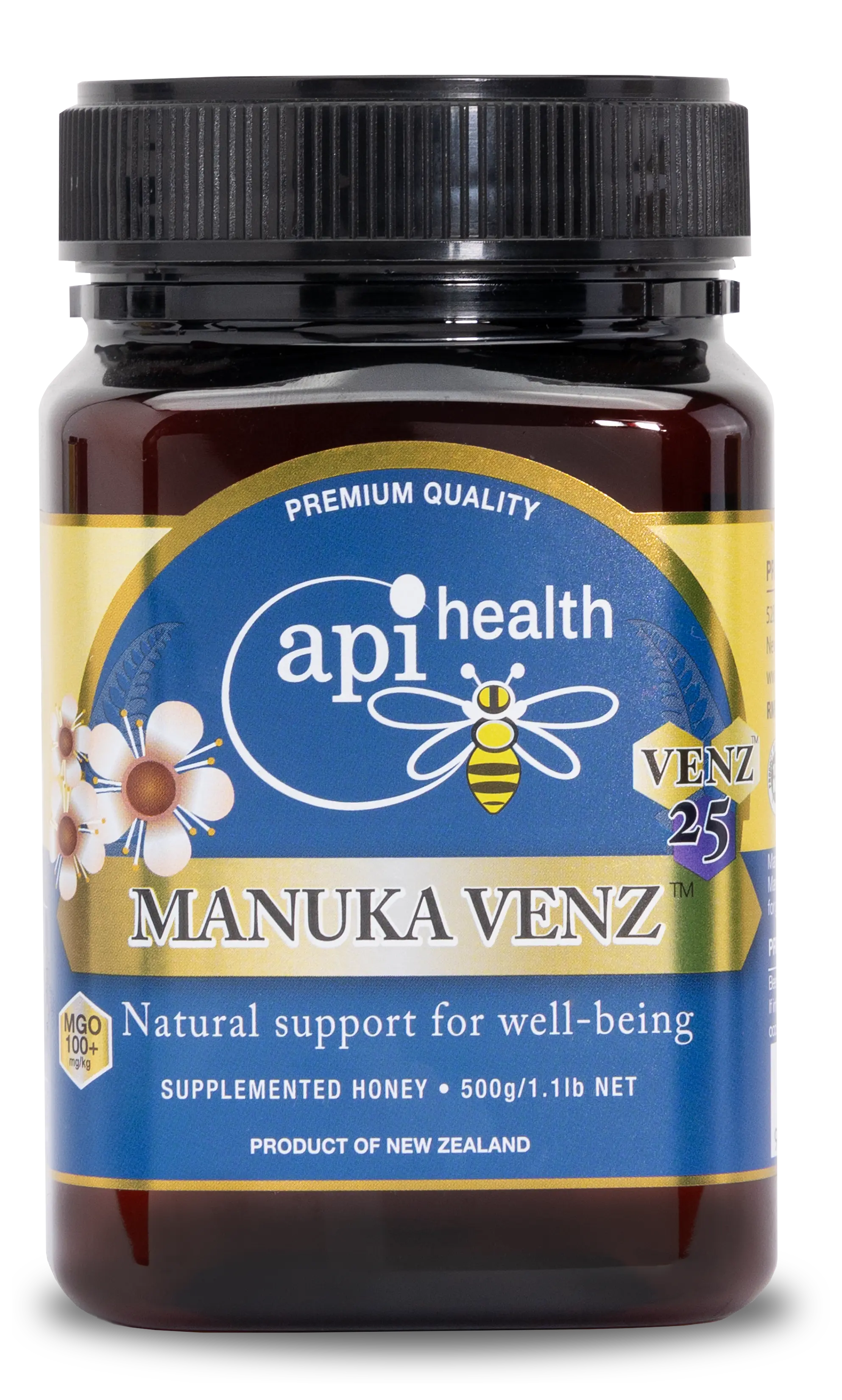
Manuka Venz™
A Manuka honey formula with VENZ™ bee venom to support mobility, immune wellbeing and natural resilience
$24.00
Related Articles
View all
Bee Products for Longevity: How Manuka Honey, VENZ™, Propolis and Royal Jelly Support Healthy Ageing
Manuka honey, bee venom, propolis and royal jelly are often grouped together as bee products for longevity. Here is what the science says about each one.
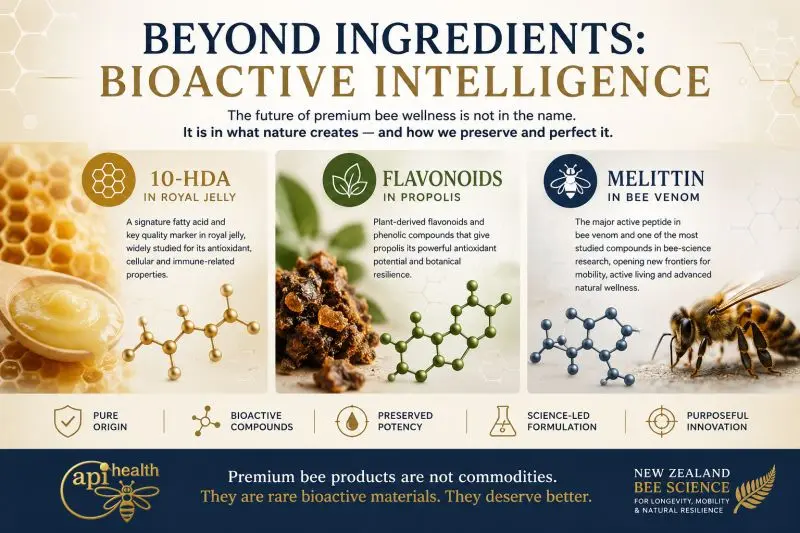
Beyond Ingredients: The Bioactive Compounds in Bee Products
A clear look at the bioactive compounds in bee products: 10-HDA in royal jelly, flavonoids in propolis, and melittin in bee venom, and why preservation matters.
Does Bee Venom Cream Really Work for Arthritis and Joint Pain?
Does bee venom cream actually help arthritis and joint pain? Here is how it works, what the research really shows, how to apply it safely, and where to find a traceable New Zealand bee venom cream.
Shop ApiHealth
Ready to bring the hive home?
Explore our New Zealand-made Manuka honey, VENZ bee venom, propolis and natural wellness range, crafted by our family of beekeepers and researchers.
