
Published by Dr. Tatiana Nikolaeva
Quick answer: Green-lipped mussel may help support comfortable movement and everyday mobility in some dogs. Several controlled canine studies have reported improvements in selected pain, function or mobility measures, but results vary and it is not a cure for arthritis. Choose a clearly labelled product from a reputable manufacturer, follow its directions, and ask your veterinarian before use if your dog has a health condition, takes medication or has a shellfish allergy.
When a dog slows down on walks, hesitates before jumping into the car or seems stiff after resting, it is natural to look for something that may support their joints. In New Zealand, one ingredient appears again and again: green-lipped mussel.
Green-lipped mussel is not simply a fashionable overseas ingredient. It comes from the New Zealand shellfish Perna canaliculus, and it has been studied in dogs with osteoarthritis and mobility problems. That makes it an interesting option, but one that still deserves a realistic, evidence-led look.
This guide explains what green-lipped mussel may do, what the canine research actually found, the safety points to consider and how to compare dog joint supplements in New Zealand.
What is green-lipped mussel?
Green-lipped mussel, also called green-shell mussel or GLM, is a marine shellfish native to New Zealand. Supplement makers use processed mussel powder or extracts as a source of naturally occurring lipids, omega-3 fatty acids, proteins and other marine compounds.
That natural mixture is important. “Contains green-lipped mussel” does not mean every product is equivalent. The form of the ingredient, the quantity used, processing conditions, storage and the other ingredients in the formula can all affect the finished supplement.
You may find green-lipped mussel in powders, capsules, oils, foods and chewable tablets. The best format is usually the one that gives you clear labelling and that your dog will take consistently.
What are the potential benefits of green-lipped mussel for dogs?
The main reason owners use green-lipped mussel is to support joint comfort and mobility. Possible practical benefits may include:
- supporting more comfortable everyday movement;
- helping maintain mobility in older or active dogs;
- providing marine nutrients commonly used in joint-health formulas; and
- complementing a broader plan that may include weight management, appropriate exercise, rehabilitation and veterinary treatment.
The careful wording matters. A supplement may support a dog’s joint health, but it should not be described as rebuilding damaged joints, curing arthritis or replacing prescribed treatment.
What does the research show?
Green-lipped mussel has been tested in several controlled canine studies. The studies are encouraging enough to make the ingredient worth considering, but they do not show that every dog or every green-lipped mussel product will respond in the same way.
Controlled trials have reported improvements in some outcomes
A 2006 randomised controlled trial evaluated green-lipped mussel in dogs with degenerative joint disease. A later double-blinded controlled trial published in 2008 also studied a green-lipped mussel preparation in dogs with osteoarthritis.
In a 2013 controlled clinical study, dogs with osteoarthritis were fed a diet enriched with green-lipped mussel. The researchers reported improvements in measures related to pain behaviour and function. A 2024 study examined a combined green-lipped mussel and krill-oil supplement and reported favourable changes in selected mobility and pain measures.
The limitations are just as important
These studies used particular diets or formulations, and some involved more than one active marine ingredient. Study sizes, assessment methods and treatment periods also differed. That means the findings cannot automatically be transferred to every powder, chew or tablet on the shelf.
It is also normal for individual dogs to respond differently. Age, body weight, activity, the cause and severity of the mobility problem, concurrent treatment and whether the supplement is given consistently can all influence what an owner notices.
A sensible conclusion is that green-lipped mussel has some supportive canine evidence, particularly for osteoarthritis-related mobility, but it should be treated as one part of a wider joint-care plan rather than a guaranteed result.
Green-lipped mussel compared with other dog joint ingredients
Many joint supplements combine several ingredients. More ingredients are not automatically better; the useful questions are why each ingredient is there, whether the quantities are disclosed and whether the combination is suitable for your dog.
Green-lipped mussel
A New Zealand marine ingredient containing naturally occurring lipids and other nutrients. It has been investigated in canine osteoarthritis studies and is commonly selected for joint comfort and mobility support.
Glucosamine
Glucosamine is a common component of dog joint formulas. It is often included to support cartilage and normal joint structure. Evidence varies between products and studies, so look for a clearly stated form and amount rather than relying on the word “glucosamine” on the front label.
Fish oil and other omega-3 sources
Marine oils can provide EPA and DHA, omega-3 fatty acids used in many mobility and veterinary nutrition plans. Check whether a product identifies the actual EPA and DHA content rather than only listing the total amount of fish oil.
Bee venom
Bee venom is a distinct ingredient with a different safety profile. ApiHealth uses its New Zealand VENZ™ bee venom in selected mobility formulas. A product containing bee venom is not appropriate for a dog with a known bee-sting allergy, and owners should seek veterinary advice if they are unsure.
Is green-lipped mussel safe for dogs?
Many dogs tolerate appropriately formulated green-lipped mussel supplements, but “natural” never means risk-free. Important precautions include:
- Shellfish sensitivity: avoid green-lipped mussel if your dog has a known shellfish allergy or has previously reacted to a marine supplement.
- Digestive upset: stop the product and contact your veterinarian if vomiting, diarrhoea, loss of appetite or another unexpected reaction occurs.
- Medication and health conditions: ask your veterinarian before starting a supplement if your dog takes medicine, has a diagnosed illness, is pregnant or nursing, or is preparing for surgery.
- Multiple supplements: check for duplicated ingredients when combining products. Giving two joint formulas can unintentionally double up certain nutrients.
- Product-specific allergens: read the full ingredient and warning panels. A combination formula may contain bee products, fish, flavourings or other ingredients unrelated to the mussel itself.
Do not use a human joint supplement unless your veterinarian specifically recommends it. Human products may provide unsuitable quantities or contain flavours and sweeteners that are not intended for dogs.
When should a stiff or limping dog see a veterinarian?
A supplement should not delay diagnosis. Book a veterinary assessment if your dog has a new limp, persistent stiffness, swelling, pain when touched, a sudden change in activity, difficulty standing, weakness, loss of appetite or symptoms that are getting worse.
Mobility changes can have many causes, including injury, osteoarthritis, spinal or neurological problems and illness elsewhere in the body. A veterinarian can identify the likely cause and help build a plan that may combine pain management, body-weight control, suitable exercise, physiotherapy and nutritional support.
How to choose a dog joint supplement in New Zealand
Instead of choosing the product with the loudest promise, compare these practical details.
- Start with the full ingredient panel. Look for named ingredients and their amounts, not only a proprietary blend or a list of fashionable terms.
- Check the directions for your dog’s size. A useful product should provide clear, weight-based feeding directions. Follow the product label or your veterinarian’s advice rather than copying a generic dose from the internet.
- Look at the manufacturer. Prefer a company that identifies where the product is made, provides batch or quality information and can answer questions about its ingredients.
- Review allergens and warnings. Check for shellfish, bee products and any other ingredient to which your dog may be sensitive.
- Consider the complete formula. Green-lipped mussel may be used alone or alongside ingredients such as glucosamine and marine oils. Choose a formula that matches your dog’s needs rather than simply counting ingredients.
- Choose a format you can give consistently. A powder is not useful if your dog refuses the meal. Chewable tablets may be more convenient for some households.
- Set a review point. Record simple observations such as willingness to walk, ease of rising and comfort on stairs. Review progress with your veterinarian, especially if your dog already has diagnosed joint disease.
A New Zealand-made option from ApiHealth
ApiHealth Mobility Support for Dogs Chewable Tablets combine New Zealand green-shell mussel with glucosamine HCl and ApiHealth’s VENZ™ New Zealand bee venom. They are made in New Zealand and batch tested.
This combination may suit owners looking for a convenient multi-ingredient mobility formula. Because it contains bee venom, it must not be given to a dog with a known bee-sting allergy. Follow the label directions and speak with your veterinarian if your dog has an existing condition, takes medication or has unexplained mobility symptoms.
You can also explore the full ApiHealth pet range or read our broader guide to bee products for pets and dogs.

Frequently asked questions
Can dogs take green-lipped mussel every day?
Many dog supplements are designed for daily use, but the right schedule depends on the individual formulation and your dog. Follow the label instructions and ask your veterinarian for advice if your dog takes medication or has a health condition.
How long does green-lipped mussel take to work for dogs?
There is no single guaranteed timeframe. Joint supplements are not fast-acting pain relief, and studies have used different treatment periods. Monitor your dog consistently and agree on a sensible review point with your veterinarian rather than increasing the amount if results are not immediate.
Is green-lipped mussel good for dogs with arthritis?
Controlled canine studies suggest that some green-lipped mussel formulations may support pain and mobility outcomes in dogs with osteoarthritis. It is not a cure and should complement, not replace, a veterinary arthritis plan.
Can puppies have green-lipped mussel?
Do not assume an adult joint product is suitable for a puppy. Nutritional needs change during growth, especially in large breeds. Ask your veterinarian whether a supplement is appropriate and use only a product whose label includes your puppy’s age and weight.
Is green-lipped mussel the same as glucosamine?
No. Green-lipped mussel is a whole marine ingredient containing several naturally occurring nutrients, while glucosamine is a specific compound. They are sometimes combined in the same dog joint supplement.
Can green-lipped mussel replace my dog’s arthritis medicine?
No. Do not stop or change prescribed medicine without speaking with the prescribing veterinarian. A supplement may be considered as part of a broader plan, but it is not a substitute for diagnosis or prescribed treatment.
The bottom line
Green-lipped mussel is one of the more relevant joint-support ingredients for New Zealand dog owners. It has a plausible nutritional profile and several controlled canine studies behind it. The evidence is promising rather than definitive, and the quality and composition of products vary.
Choose a clearly labelled formula from a reputable manufacturer, pay attention to allergens and additional ingredients, follow the product directions and keep your veterinarian involved. The most useful supplement is not the one that promises the most. It is the one that fits safely into a well-considered plan for your dog.
Research referenced
- Randomised controlled canine trial, 2006 (PubMed)
- Double-blinded controlled canine trial, 2008 (PubMed)
- Green-lipped-mussel-enriched diet and canine osteoarthritis, 2013 (PubMed)
- Green-lipped mussel and krill-oil canine study, 2024 (PubMed)
This article provides general educational information and is not a substitute for veterinary diagnosis or treatment.
About the author
Dr. Tatiana Nikolaeva
Co-founder & Product Researcher, ApiHealth NZ
Dr. Tatiana Nikolaeva works alongside the ApiHealth research team in New Zealand, focusing on natural formulations across the company’s bee-derived wellness and skincare ranges. She writes on Manuka honey, bee pollen and everyday natural wellness.
More about the ApiHealth teamKey Ingredients
Featured Products
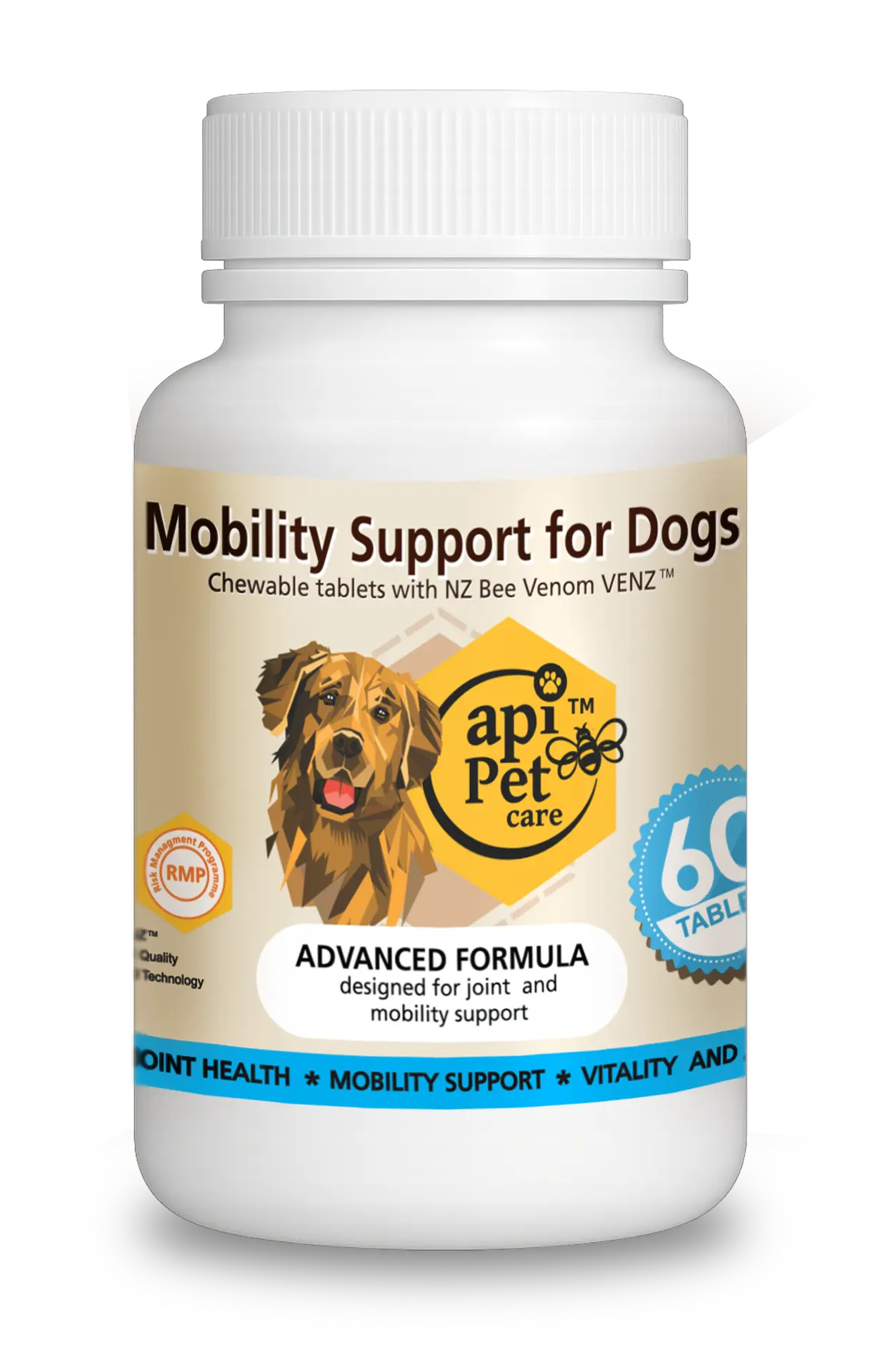
Mobility Support For Dogs. Chewable Tablets
Mobility Support for Dogs is an advanced formula with NZ bee venom VENZ™, Glucosamine and Green Lipped mussels
$32.00
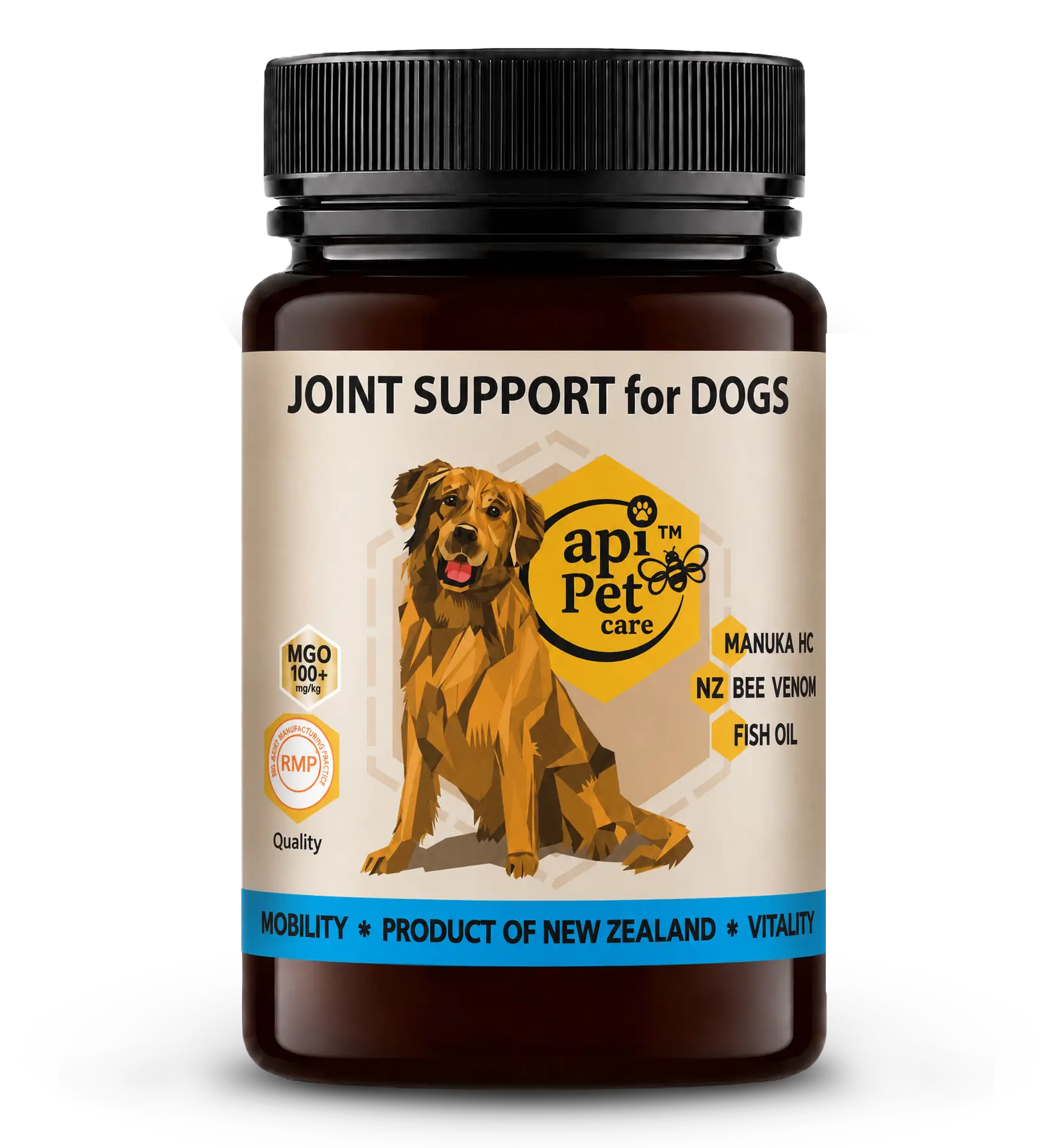
Joint Support Manuka Honey For Dogs
A Manuka honey formula for dogs with VENZ™ bee venom and fish oil, crafted to support joint comfort, mobility and an active daily life.
$25.00
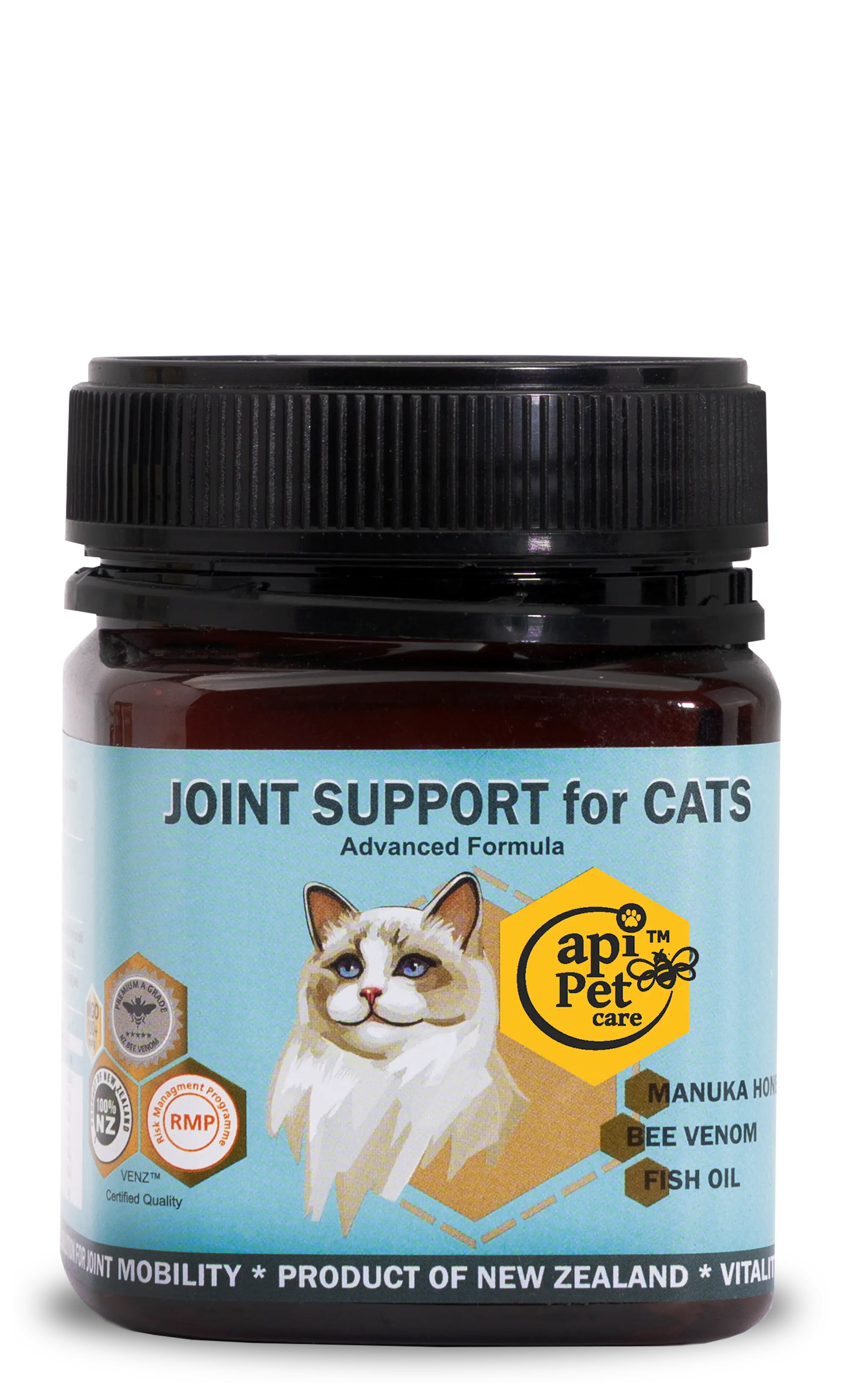
Joint Support Manuka Honey For Cats
New Zealand Manuka honey blend crafted to support joint mobility in cats.
$25.00
Related Articles
View all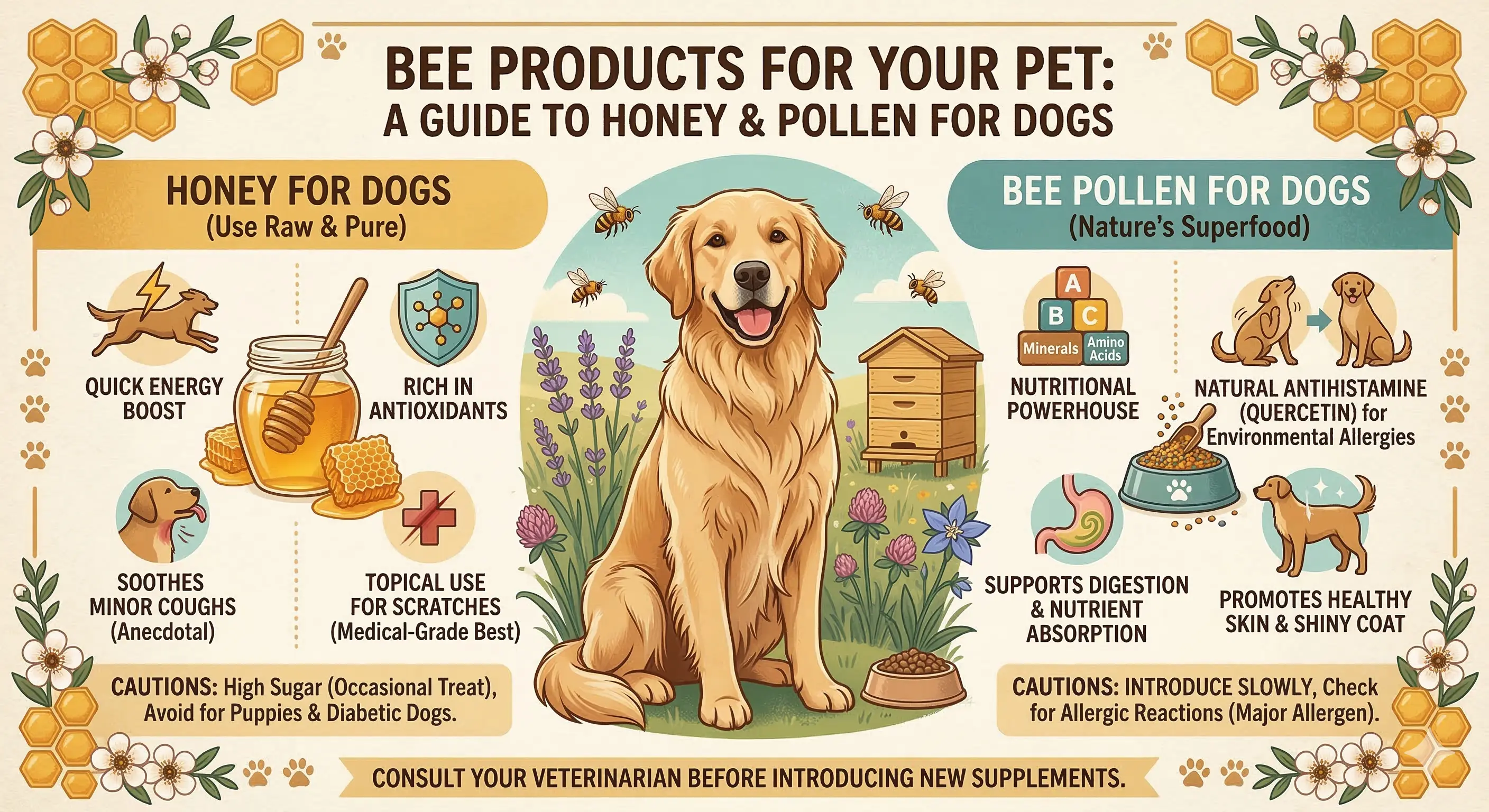
Bee Products for Pets: Honey, Propolis & Pollen for Dogs
Manuka honey, propolis, and bee pollen can support pet health, from wound healing to immune support and nutrition. Here's what's safe, what's effective, and the right dosages for dogs.

Tutin Testing in New Zealand Honey: What It Means and How to Read a Lab Certificate
Understand tutin testing in New Zealand honey, the safety limit and lab report symbols. Learn what to check and how it differs from UMF and MGO grading.

Bee Products for Longevity: How Manuka Honey, VENZ™, Propolis and Royal Jelly Support Healthy Ageing
Manuka honey, bee venom, propolis and royal jelly are often grouped together as bee products for longevity. Here is what the science says about each one.
Shop ApiHealth
Ready to bring the hive home?
Explore our New Zealand-made Manuka honey, VENZ bee venom, propolis and natural wellness range, crafted by our family of beekeepers and researchers.