
Published by Dr. Tatiana Nikolaeva
Deer antler velvet has been valued as a wellness tonic for more than two thousand years. Today, adults in their mid-thirties and beyond are rediscovering it as part of active ageing routines: staying mobile, maintaining energy, and supporting the body through busy work weeks and regular exercise. At ApiHealth, we see this ingredient through the same lens we apply to all our work: the future of apitherapy is not the bee sting itself. It is the science behind the bee, paired with rigorously sourced natural compounds that support daily resilience.
That philosophy matters here because deer antler velvet is often discussed in sweeping benefit lists. A trust-building approach looks at what the tissue actually contains, what human trials have (and have not) shown, and how a thoughtful formula can fit into everyday wellness without overpromising.
This article is educational and is not a substitute for medical advice. Always follow product labels and speak with a qualified health professional for personal health concerns.
What Is Deer Antler Velvet?
Deer antler velvet is the soft, cartilaginous tissue that covers a stag's antlers while they are still growing. Unlike hardened antler bone, velvet is harvested at a specific growth stage, then processed into extracts used in dietary supplements. In traditional Chinese medicine, it has long been regarded as a tonic for strength, vitality, and overall balance.
New Zealand is one of the world's leading producers of farmed deer velvet, with welfare standards governing how velvet is removed under anaesthesia and traceability systems that track each batch from farm to processing. For readers who care about where their supplements come from, that provenance story is part of the value proposition. You can explore more about the ingredient itself on our deer velvet ingredient page.
Why Adults 35+ Are Paying Attention
Life after 35 often brings a shift in priorities. Recovery from exercise may take longer. Energy can feel less predictable. Joint comfort and mobility become practical concerns, not abstract ones. Deer antler velvet appeals in this life stage because it sits at the intersection of traditional tonic use and modern interest in musculoskeletal wellness.
Unlike stimulants that deliver a short spike, velvet is traditionally framed as a restorative tonic: something you take consistently as part of a broader routine that includes sleep, nutrition, and movement. That slower, supportive framing aligns well with how many people in this age group approach wellness today.
What the Research Suggests
Scientific interest in deer antler velvet centres on its biochemical complexity. Reviews describe proteins, peptides, amino acids, lipids, polysaccharides, and minerals, alongside growth-associated factors such as insulin-like growth factor-1 (IGF-1), epidermal growth factor (EGF), and transforming growth factor-beta (TGF-beta). Collagen and glycosaminoglycans, including chondroitin sulfate and hyaluronic acid, are also present. These components offer mechanistic plausibility for tissue support, but plausibility is not the same as proven clinical benefit.
A systematic review published in The New Zealand Medical Journal examined randomised controlled trials of velvet antler supplements across conditions including osteoarthritis, rheumatoid arthritis, sexual function, and sporting performance. The authors concluded that marketing claims often outpace rigorous human evidence. Some osteoarthritis findings showed promise, but overall results were inconsistent. That honest picture is important: deer velvet is biologically interesting, yet large, well-designed human trials remain limited.
Preclinical work tells a more active story. Laboratory and animal studies have explored deer antler peptides for chondrocyte growth, collagen synthesis, and bone metabolism. A 2024 review in Pharmaceuticals highlighted how specific peptides may support osteoblast activity and cartilage matrix components in controlled experimental settings. Again, these findings are encouraging for researchers, but they have not yet translated into definitive clinical recommendations.
On athletic performance, a randomised controlled trial in International Journal of Sport Nutrition and Exercise Metabolism found that deer antler velvet powder was associated with greater improvements in isokinetic knee strength and endurance compared with placebo after a training block, though not all measured outcomes differed between groups. Other trials reported no meaningful advantage. The takeaway for readers: some people may notice subjective support for strength and stamina, but results are not uniform across studies.
Traditional Tonic Use vs Modern Evidence
Traditional medicine systems classified deer velvet as a kidney-tonifying tonic associated with vitality, endurance, and musculoskeletal support. Modern nutraceutical research tries to map those traditional categories onto measurable outcomes like joint function scores, fatigue indices, and training adaptations. The gap between the two frameworks explains much of the public confusion.
- Traditional framing: Velvet supports balance, strength, and resilience over time as a daily tonic.
- Modern research: Mixed human trial results, stronger preclinical signals, ongoing questions about oral bioavailability of growth factors.
- Practical takeaway: View velvet as complementary wellness support, not a replacement for medical care or prescribed treatment.
How ApiHealth Approaches Deer Velvet
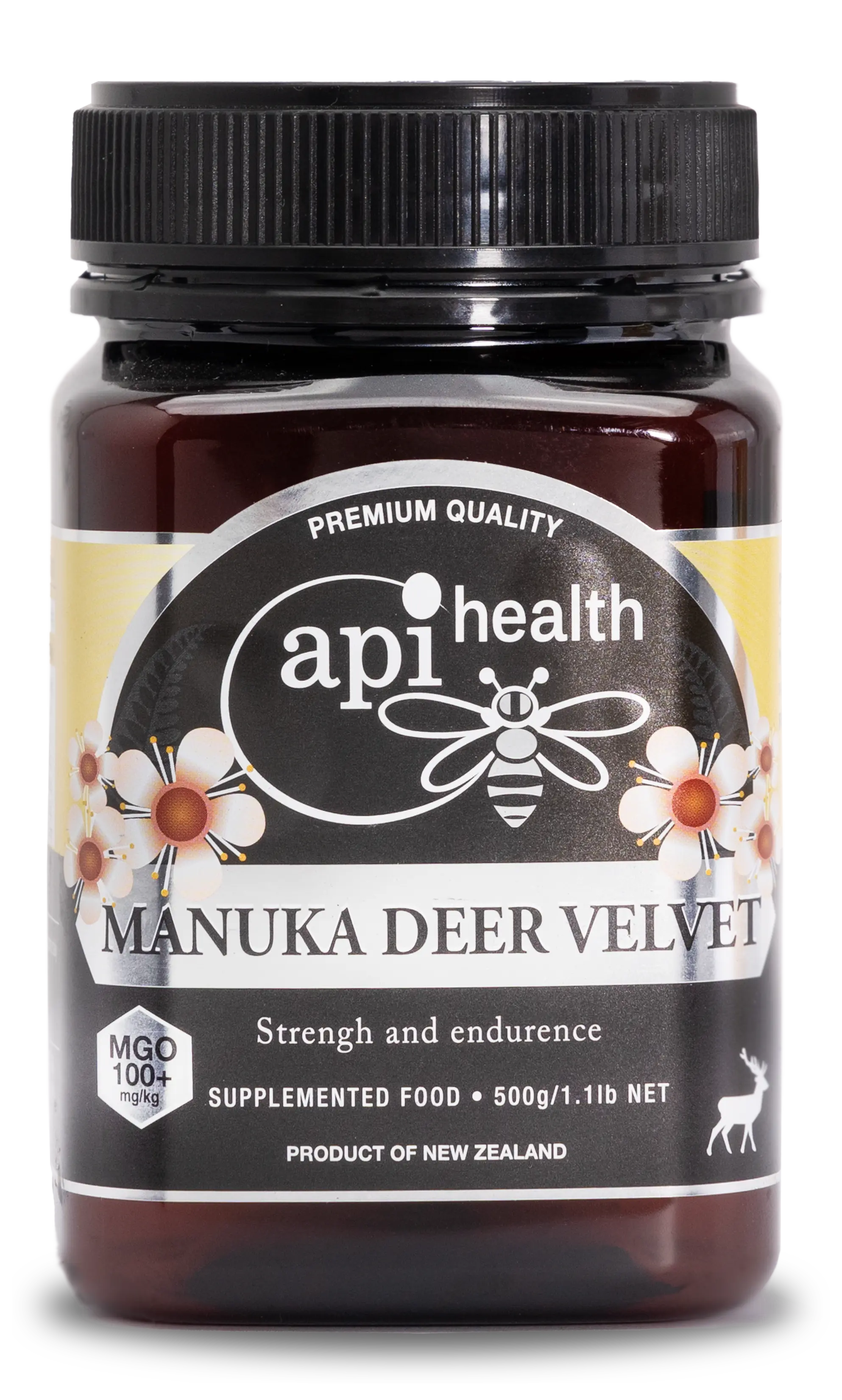
ApiHealth was founded by scientists and has operated since 1997, combining bee-derived compounds with carefully selected natural ingredients. Our Deer Antler Manuka Honey pairs New Zealand multifloral Mānuka honey (MGO 100+) with a bio-active liquid deer velvet extract at 2% concentration. The honey base makes the formula pleasant to take daily, while Mānuka brings its own researched profile as a functional food ingredient.
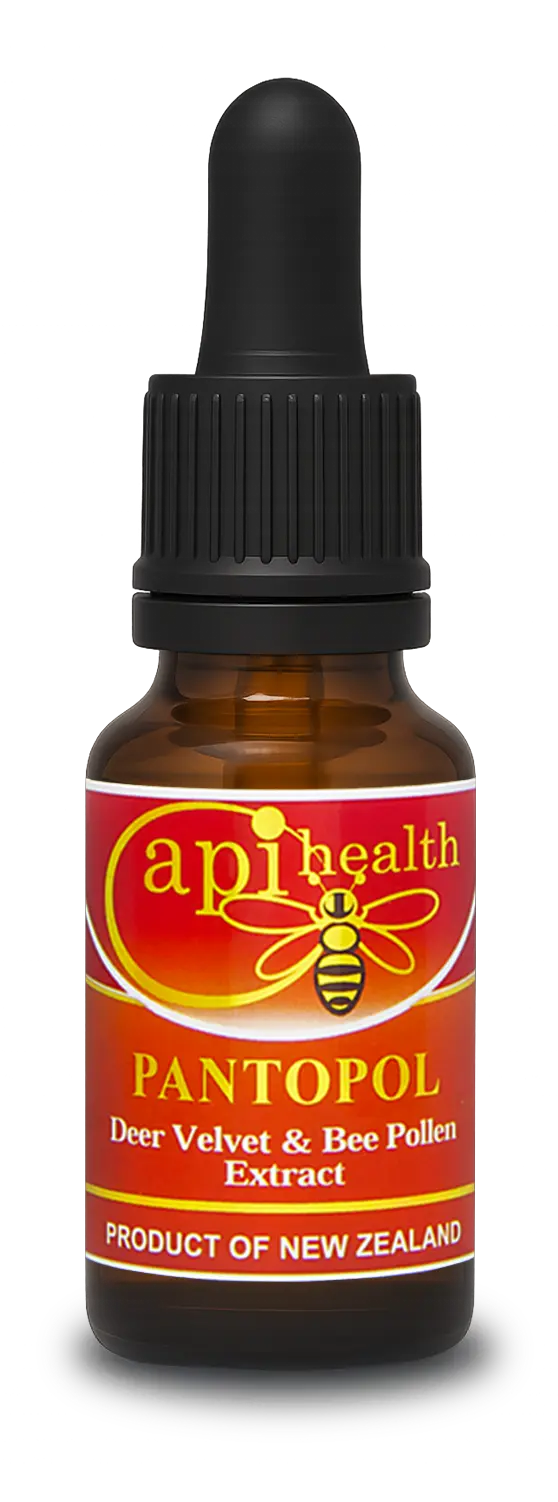
We formulate for everyday use: two to four teaspoons daily, as directed on the label. For those who prefer a more concentrated extract format, Pantopol combines New Zealand deer velvet with bee pollen in a tincture-style product within our supplements range.
Quality and traceability matter as much as formulation. ApiHealth holds MPI RMP certification and UMFHA membership, with in-house testing supporting batch consistency. Our science hub and trust centre explain how we approach ingredient verification and ethical sourcing across the range, including our bee-friendly venom collection patent and certificates of origin for key actives.
What to Look for in a Deer Velvet Product
Not all velvet supplements are equivalent. If you are comparing options, these signals help separate thoughtful formulas from vague marketing.
- Origin and traceability: New Zealand velvet is valued for consistent farming standards and regulated velveting programmes.
- Extract type and concentration: Liquid bio-active extracts differ from raw powder. Check the percentage on the label.
- Delivery format: Honey-based formulas suit daily spoonful routines; tinctures suit measured dropper use.
- Complementary ingredients: Pairing velvet with Mānuka honey or bee pollen reflects long-standing tonic traditions in both Eastern and Western natural wellness.
- Allergy awareness: People with sensitivities to deer products should seek medical advice before use.
- Honest claims: Prefer brands that acknowledge research limits rather than promising guaranteed outcomes.
Honey-based products also carry standard cautions: not for infants under 12 months, and people managing blood sugar should consult a healthcare provider because honey is a natural sugar.
A Simple Daily Routine
Deer velvet works best as part of a consistent pattern, not a one-off experiment. Many adults 35+ integrate it alongside morning movement, adequate protein intake, and recovery sleep. Taking your chosen formula at the same time each day, whether stirred into warm water or taken straight from the spoon, builds the habit that tonic traditions always assumed.
If you are already exploring ApiHealth's functional honey range, deer velvet honey can sit naturally beside propolis or pollen products for layered daily support. Read more about our founding approach on our story page.
Frequently Asked Questions
What is deer antler velvet used for?
Traditionally, deer antler velvet is used as a tonic to support strength, endurance, energy, and joint mobility. Modern research explores these areas, but human clinical evidence remains mixed. It is best viewed as complementary daily wellness support.
Is deer antler velvet the same as hardened deer antlers?
No. Velvet is the soft growing tissue harvested before antlers calcify into bone. The composition and traditional uses differ from hardened antler products.
Does deer antler velvet really contain growth factors?
Laboratory analyses have identified growth-associated factors including IGF-1 in deer velvet tissue. However, whether intact growth factors survive digestion and reach meaningful systemic levels after oral supplementation is still debated by researchers.
Who should avoid deer antler velvet?
People with known allergies or sensitivities to deer products should avoid velvet supplements unless cleared by a healthcare professional. Pregnant or breastfeeding individuals and those managing health conditions should consult their provider before starting any new supplement.
How is New Zealand deer velvet harvested?
In New Zealand, velvet removal is a regulated procedure performed under anaesthesia by veterinarians or certified farmers following National Velveting Standards Body protocols. Welfare, traceability, and hygiene requirements apply throughout processing.
How does Deer Antler Manuka Honey fit into a wellness routine?
Our formula combines MGO 100+ multifloral Mānuka honey with 2% New Zealand deer velvet bio-active extract. Most adults take two to four teaspoons daily as a pleasant, food-based way to include velvet alongside other healthy habits.
Bottom Line
Deer antler velvet is a fascinating ingredient with deep traditional roots and genuine scientific interest. For adults 35+ building an active ageing routine, it may support daily vitality and musculoskeletal wellness as part of a broader lifestyle approach. The evidence is promising in places, but it is not yet definitive in large human trials. That is exactly why ApiHealth pairs NZ-sourced velvet with tested Mānuka honey in transparent formulas you can review before committing. Explore Deer Antler Manuka Honey or browse the full supplements collection to find a format that suits your routine.
About the author
Dr. Tatiana Nikolaeva
Co-founder & Product Researcher, ApiHealth NZ
Dr. Tatiana Nikolaeva works alongside the ApiHealth research team in New Zealand, focusing on natural formulations across the company’s bee-derived wellness and skincare ranges. She writes on Manuka honey, bee pollen and everyday natural wellness.
More about the ApiHealth teamKey Ingredients
Featured Products
Related Articles
View all
Tutin Testing in New Zealand Honey: What It Means and How to Read a Lab Certificate
Understand tutin testing in New Zealand honey, the safety limit and lab report symbols. Learn what to check and how it differs from UMF and MGO grading.
Bee Products for Longevity: How Manuka Honey, VENZ™, Propolis and Royal Jelly Support Healthy Ageing
Manuka honey, bee venom, propolis and royal jelly are often grouped together as bee products for longevity. Here is what the science says about each one.
Bee Products for Women's Health: What the Science Suggests
A simple, science-aware guide to bee products for women's health: royal jelly, bee pollen and propolis for hormonal balance, energy and daily wellness.
Shop ApiHealth
Ready to bring the hive home?
Explore our New Zealand-made Manuka honey, VENZ bee venom, propolis and natural wellness range, crafted by our family of beekeepers and researchers.
